A Different Kind of Walking Day
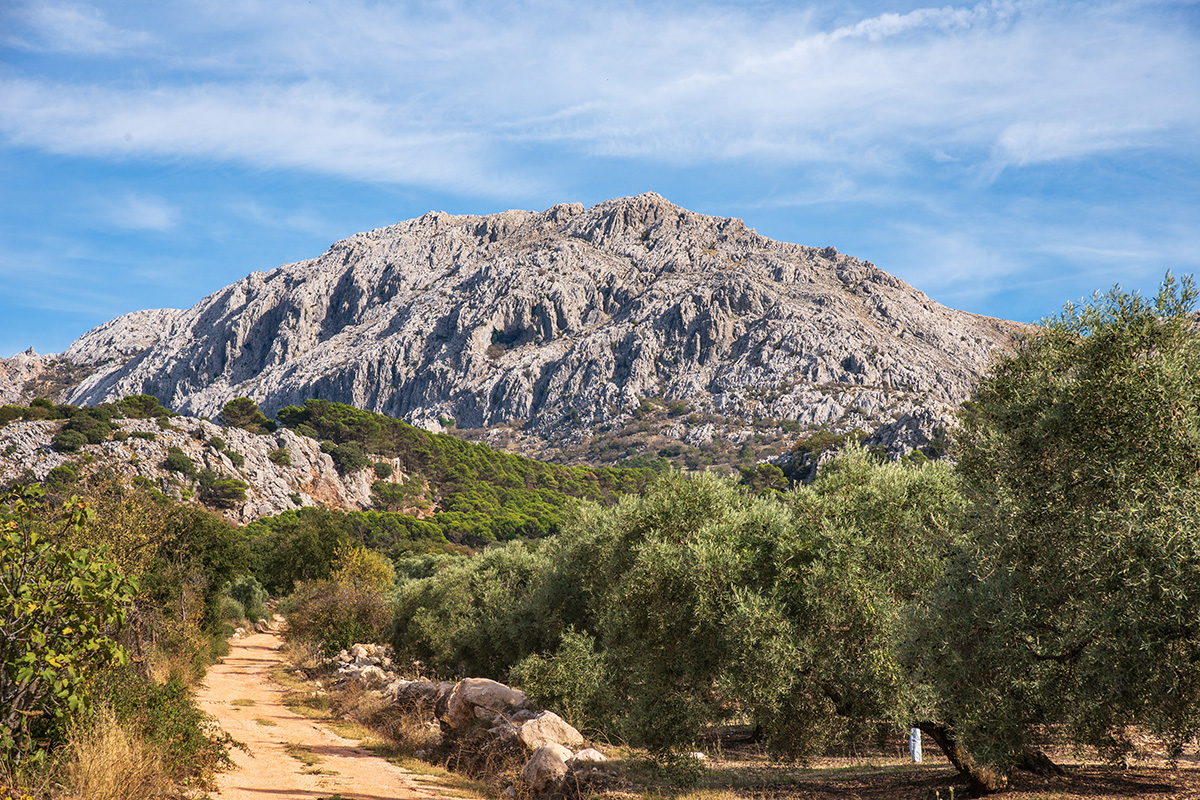
Hondonero sits beneath the limestone mountains of the Sierra de Camarolos, a wonderfully quiet landscape of olive groves, open countryside and mountain meadows. At first glance, it is simply a beautiful place to walk, but much more is happening beneath the surface.
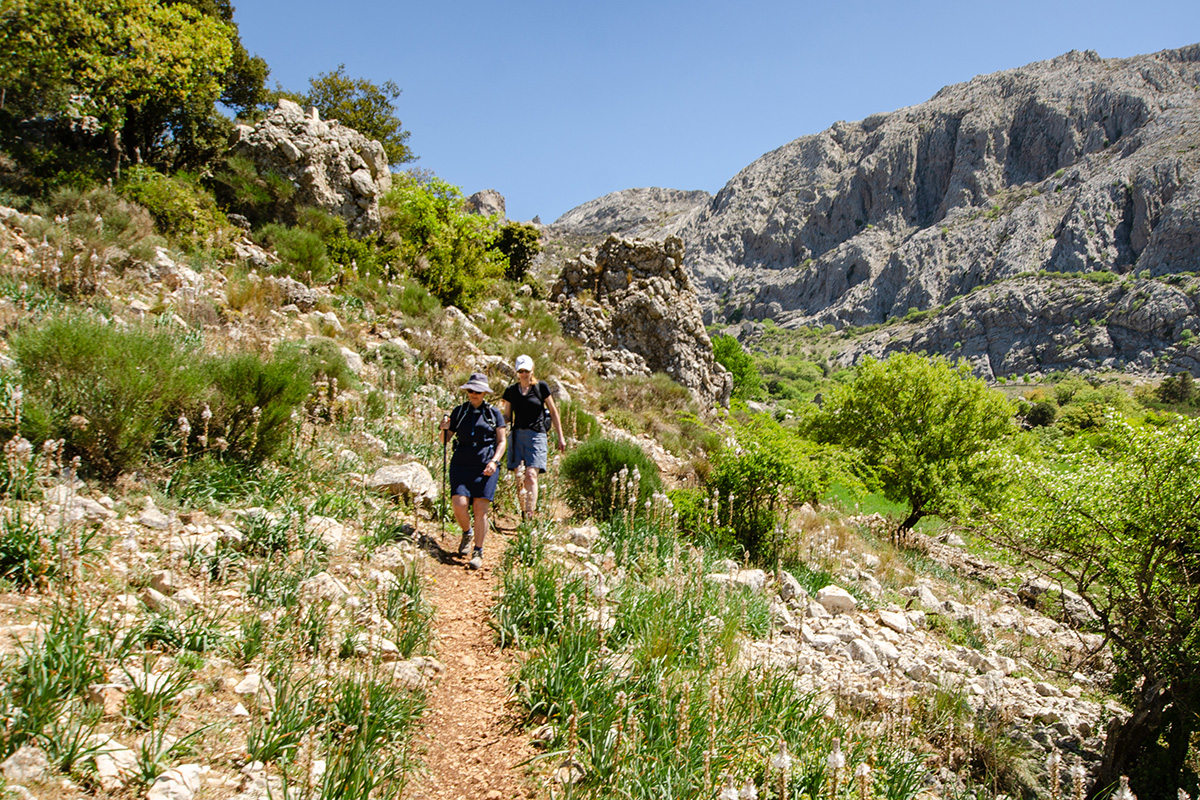
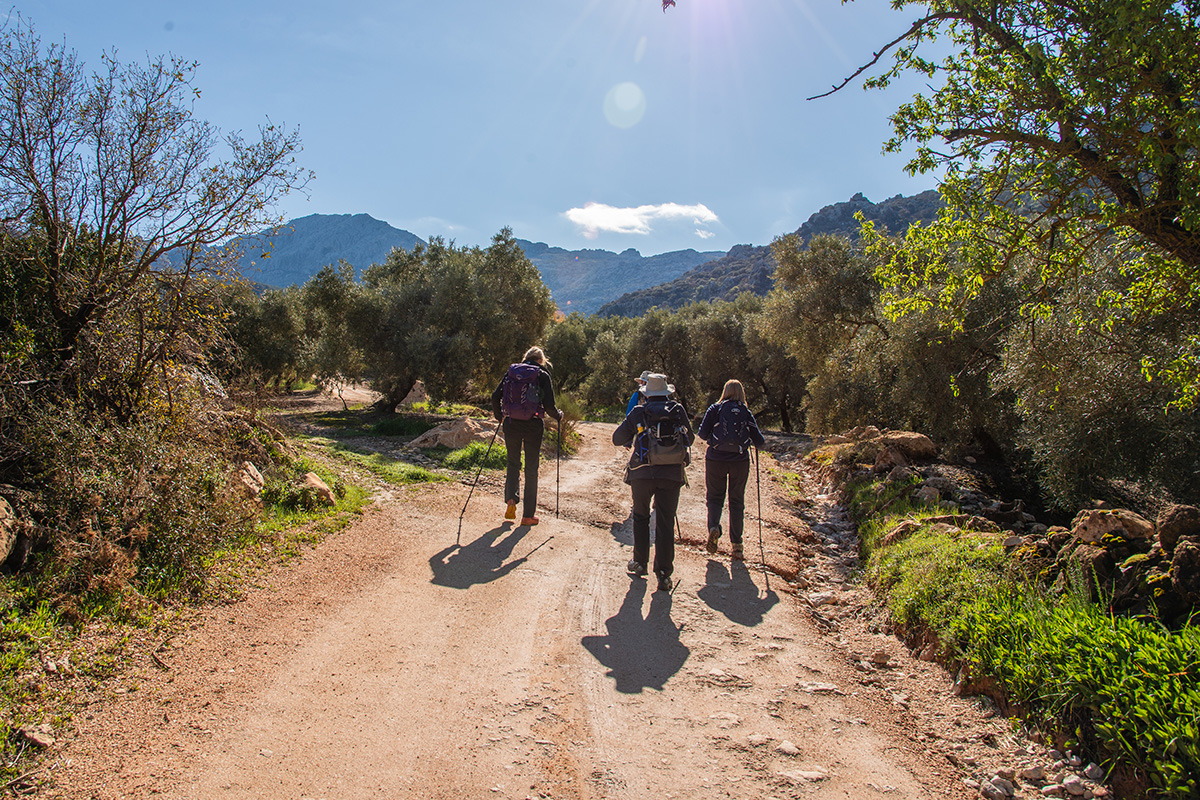
The route begins near Villanueva del Rosario, on the northern side of the Central Limestone Arch, with the mountains of the Sierra de Camarolos rising ahead. From here it climbs gradually towards Hondonero, initially following tracks through olive groves before becoming narrower and rockier as it draws closer to the mountains.
It is a steady climb, so we are certainly working, but the height seems to accumulate almost without us noticing. Every so often the landscape opens behind us, while ahead the limestone begins to dominate the skyline.
There is a wonderful quietness to the walking at Hondonero. We often find ourselves on a path with very few people around us, surrounded by olive groves, open countryside and mountains, with plenty of time to stop, look around and simply enjoy being out in the countryside.
Yet Hondonero is far from an empty landscape. As we climb, we encounter clues to a story connecting these mountains with the people who have lived beneath them for thousands of years. Much of that story begins with something we cannot initially see: the water beneath the limestone.
Water Beneath the Limestone
As we climb towards Hondonero, the limestone mountains ahead of us can appear surprisingly dry. Yet these mountains hold and move enormous quantities of water, much of it hidden from view.
Rain falling onto the Sierra de Camarolos finds its way into cracks and fissures in the limestone. Rather than simply running down the mountainside, some of this water travels underground through the fractured rock and into the aquifer beneath the mountains. Eventually, where the geology allows, it returns to the surface as springs.
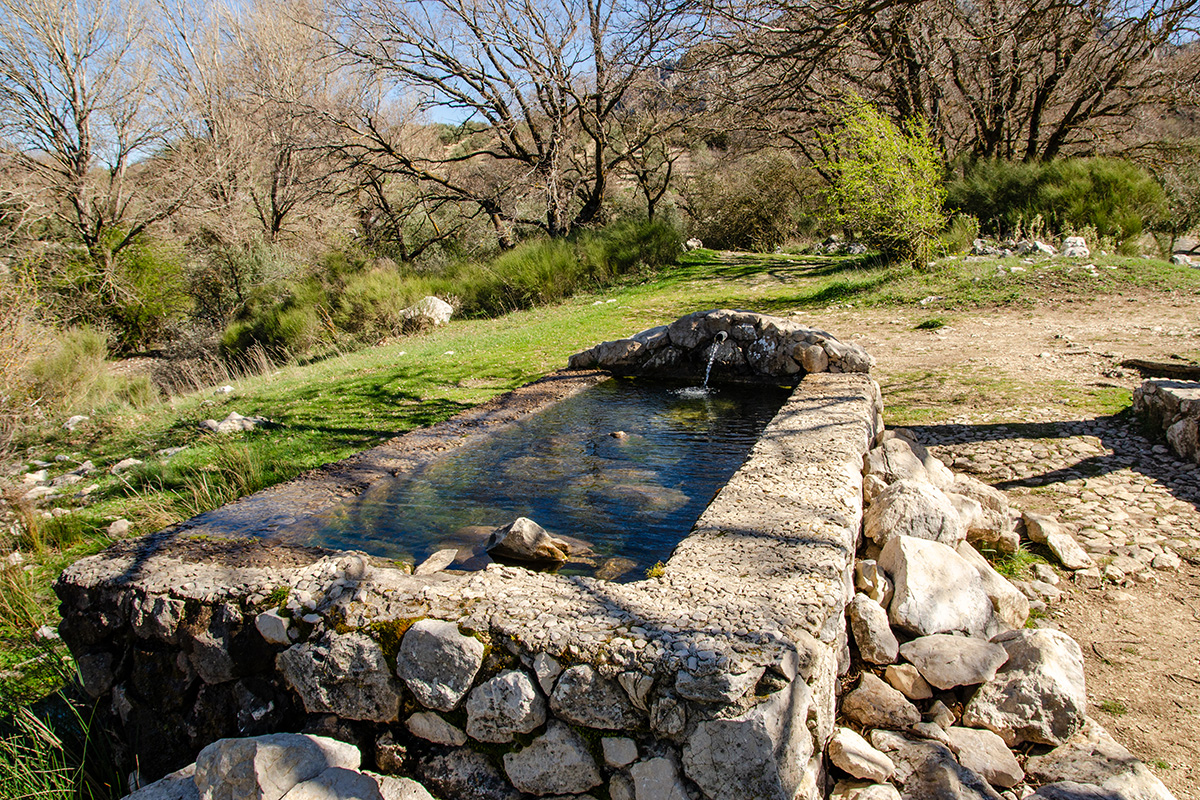
We encounter the evidence as we walk. Water emerges beneath the mountains, feeding small streams, pools and traditional stone pilares, or water troughs. At some of the springs, extraordinarily clear water seems to appear almost directly from the rock, while a small karst lagoon at Hondonero is another reminder of how water behaves in limestone country.
These springs also begin to explain something much bigger. Hondonero hasn't simply been a beautiful place for people to walk through. Water emerging from the mountains helped create a landscape where people could live, keep animals, and cultivate the land.
A Landscape That Sustained People
Hondonero is more than the name of a meadow. It forms part of the Dehesa de Hondoneros, an area of traditionally managed land beneath the mountains where water, pasture and cultivable ground have supported generations of people living and working here.
That relationship stretches much further back than the olive groves we see today. Caves within these mountains preserve evidence of prehistoric activity, including Cueva del Malnombre, where schematic rock paintings remind us that people moved through and used this landscape thousands of years ago.
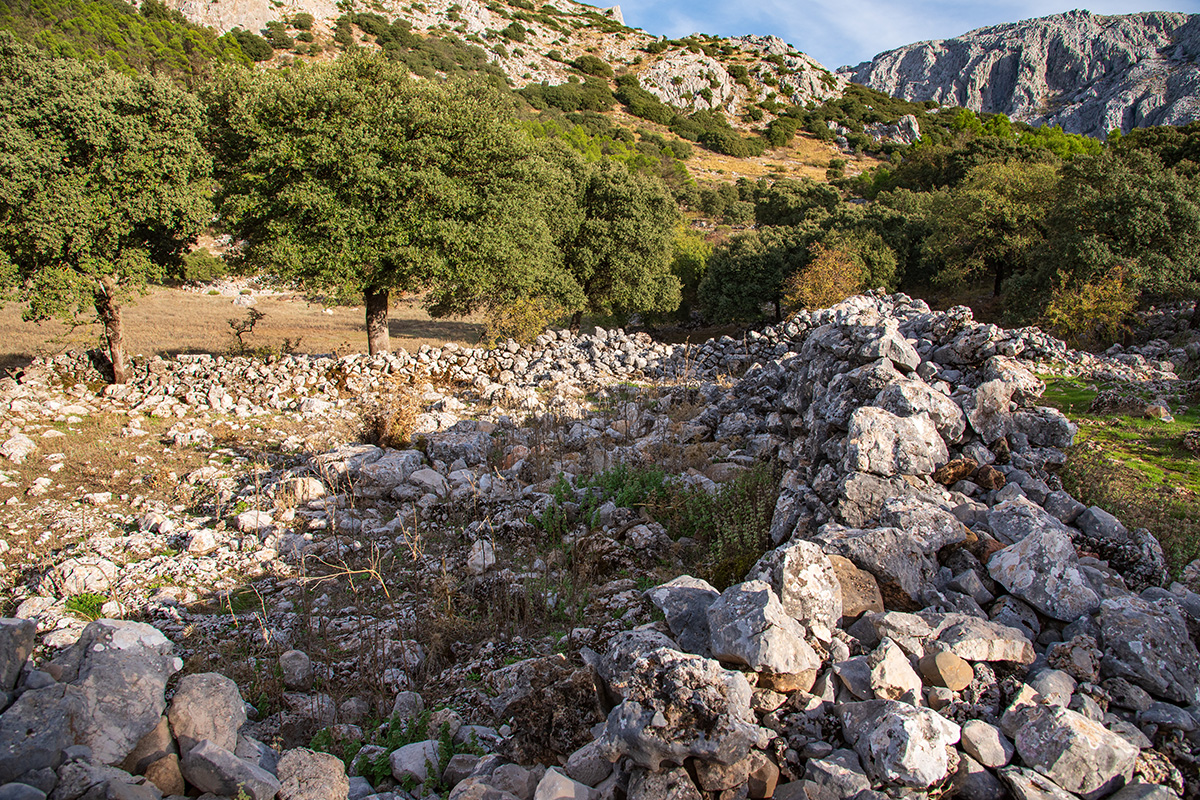
Evidence from later generations is easier to recognise. As we walk, we pass cultivated land and olive groves, but also traces of an older agricultural landscape. Wheat and barley were once important crops around Villanueva del Rosario, and higher up we encounter an old threshing floor where harvested grain would have been separated from the straw.
The springs help explain how this landscape could sustain that activity. Water emerging from beneath the limestone provided for people, livestock and cultivation, while the pilares we pass formed part of the practical infrastructure of rural life. Together with the old fields, buildings, and threshing floor, they remind us of a landscape that has supported people beneath these mountains for a very long time.
From Threshing Floor to Flour Mill
The old threshing floor gives us a glimpse of Hondonero's agricultural past. After cereals were harvested, the crop would be brought here so that the grain could be separated from the straw before being taken away for milling.
This is where two parts of the Hondonero story come together. Water emerging beneath the Sierra de Camarolos feeds the Río Cerezo, which flows down towards Villanueva del Rosario. For generations, that same water powered flour mills beside the river below.
We cannot know whether grain from these particular fields was taken to those mills, but the relationship is an interesting one. Above were fields producing cereals and threshing floors where the harvest was processed; below, water descending from the same mountains provided the power needed to turn grain into flour.
One of those old mills, Molino de las Tres Piedras, stood beside the Río Cerezo close to Villanueva del Rosario. Its three millstones were driven by water diverted from the river, and in the early twentieth century the same water power was even used to generate electricity for the village.
At the Foot of the Mountains
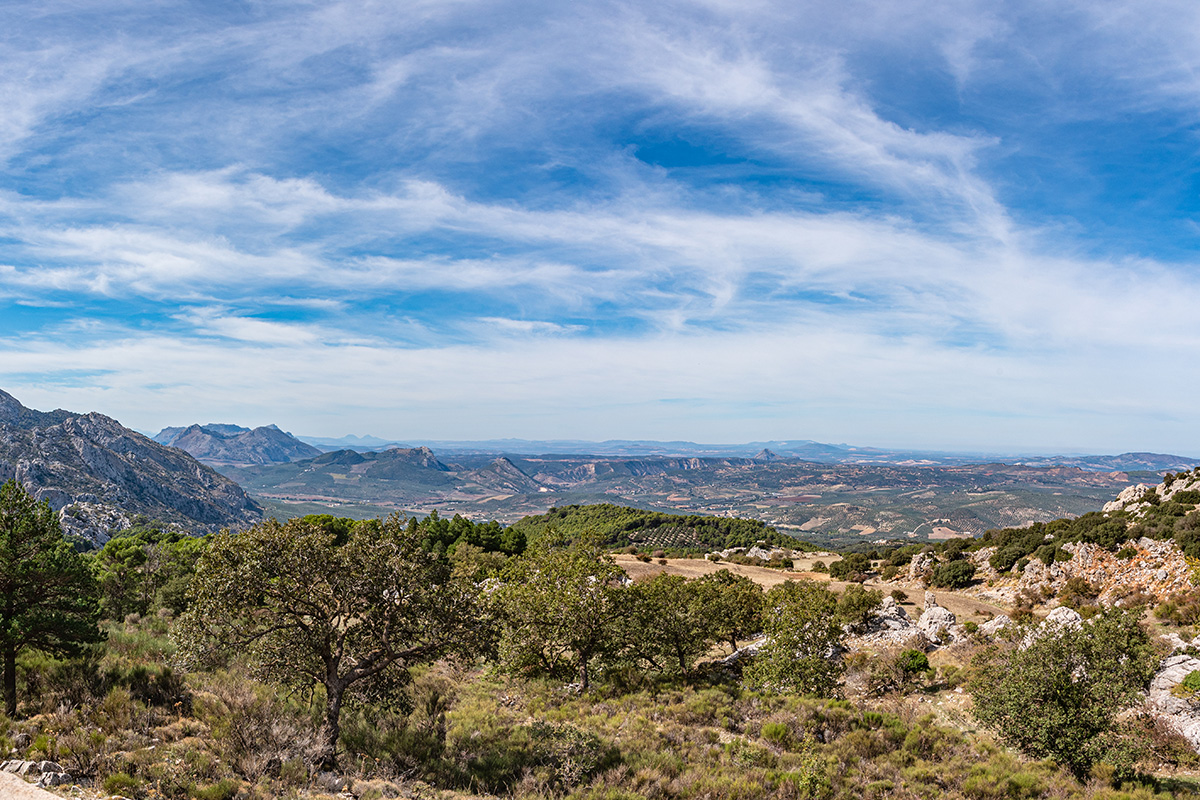
By the time we reach the Hondonero viewpoint, we've gained considerably more height than the gradual climb might have suggested. It is a natural place to stop for lunch, with the limestone slopes of the Sierra de Camarolos rising immediately behind us and an enormous landscape opening out in the opposite direction.
Looking north, the view stretches across the Antequera depression, with olive groves covering much of the lower ground and Archidona visible in the distance. After spending the morning gradually drawing closer to the mountains, only now do we really appreciate how far above the surrounding countryside we've climbed.
There is also an interesting contrast in what we're looking at. Behind us are the hard limestone and dolomite mountains through which the water we've been following has travelled. In front, younger and softer sedimentary materials create the gently rolling agricultural landscape stretching towards the horizon.
But we don't need to understand the geology to appreciate the view. This is one of those places where it is worth simply sitting for a while, having lunch and taking everything in.
More Than a Meadow in Spring
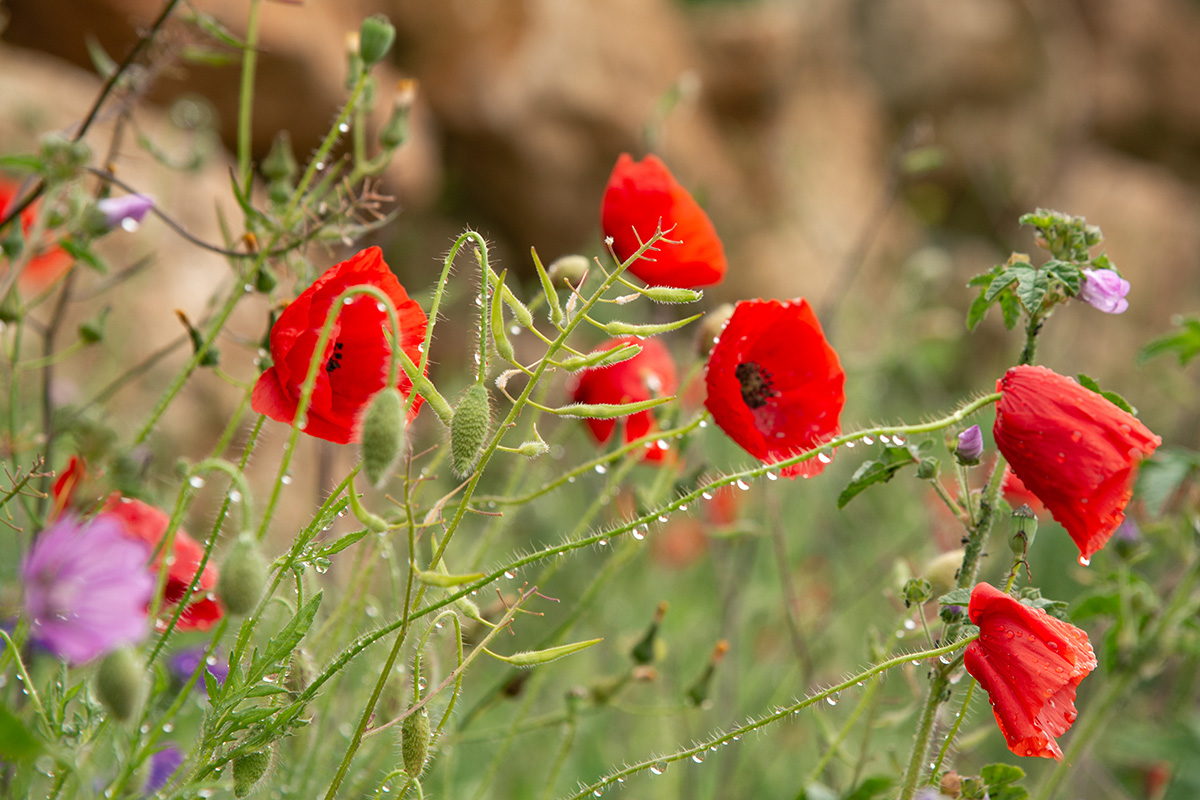
Hondonero changes considerably with the seasons, but in spring it can be particularly beautiful. Areas that might appear quite ordinary later in the year become filled with wildflowers, sometimes turning even the agricultural tracks into one of the most colourful parts of the walk.
Orchids are amongst the flowers we may find here, along with poppies and a wider mixture of spring flowers growing through the grass, beside the tracks and amongst the limestone. The display varies from year to year, and having walked the same route in different springs, I never quite know what we'll find.
There is life above us too. The Sierra de Camarolos is an important habitat for birds of prey, and the cliffs and open mountain landscape give us plenty of opportunities to watch the sky. Griffon vultures are amongst the birds we may see, while dedicated observation points along the route reflect the area's importance for birdlife.
None of these encounters is guaranteed, and that is part of their appeal. Hondonero isn't somewhere we walk through ticking things off a list. A patch of orchids beside the path or the sudden appearance of a large bird circling above the cliffs simply becomes part of the day.
The Landscape Opens Again
From the viewpoint, our route begins to descend. Depending on the season and conditions, we can follow the open agricultural tracks or make our way through the pine forest beneath the steep limestone cliffs of Chamizo. Both eventually bring us towards the Tajo de Madera, where the mountains remain close beside us, but the views north begin to open again.
The character of the descent can change enormously through the year. In drier months, the shade of the pine forest can be particularly welcome, while in spring the open route can be transformed by wildflowers. A track that might seem the less interesting option on paper can suddenly become one of the loveliest parts of the walk.
As we lose height, the water story we've followed throughout the day continues too. Some of the springs beneath these mountains feed the Río Cerezo, which flows towards Villanueva del Rosario before joining the Guadalhorce and becoming part of the much larger river system that eventually reaches the Mediterranean.
Hondonero doesn't announce itself with one great spectacle. Its pleasure lies in gradually seeing how the pieces fit together: limestone mountain, spring, meadow, field and river. But perhaps the nicest thing about it is simpler than that. We've spent the day in a beautiful, quiet landscape and had a really good day's walk.