A Landscape You Don't Expect
From a distance, El Torcal gives surprisingly little away. As we approach through the surrounding countryside, we see a long limestone ridge rising above the landscape. Little indicates what is waiting for us on top.
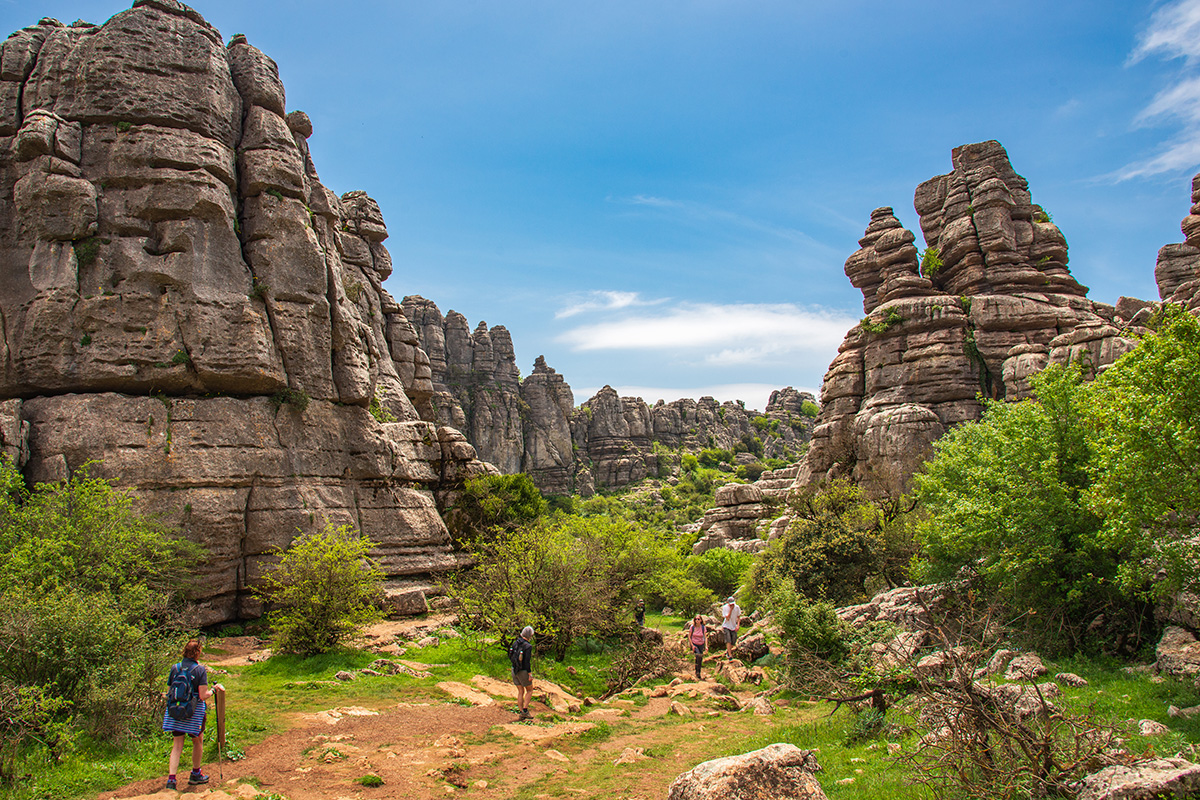
It's only as we climb the road towards the visitor centre that things begin to change. The first strange formations appear beside us, great layers of limestone stacked one above another, and almost without exception someone in the vehicle will point towards the window and say, “Wow, look at that!”
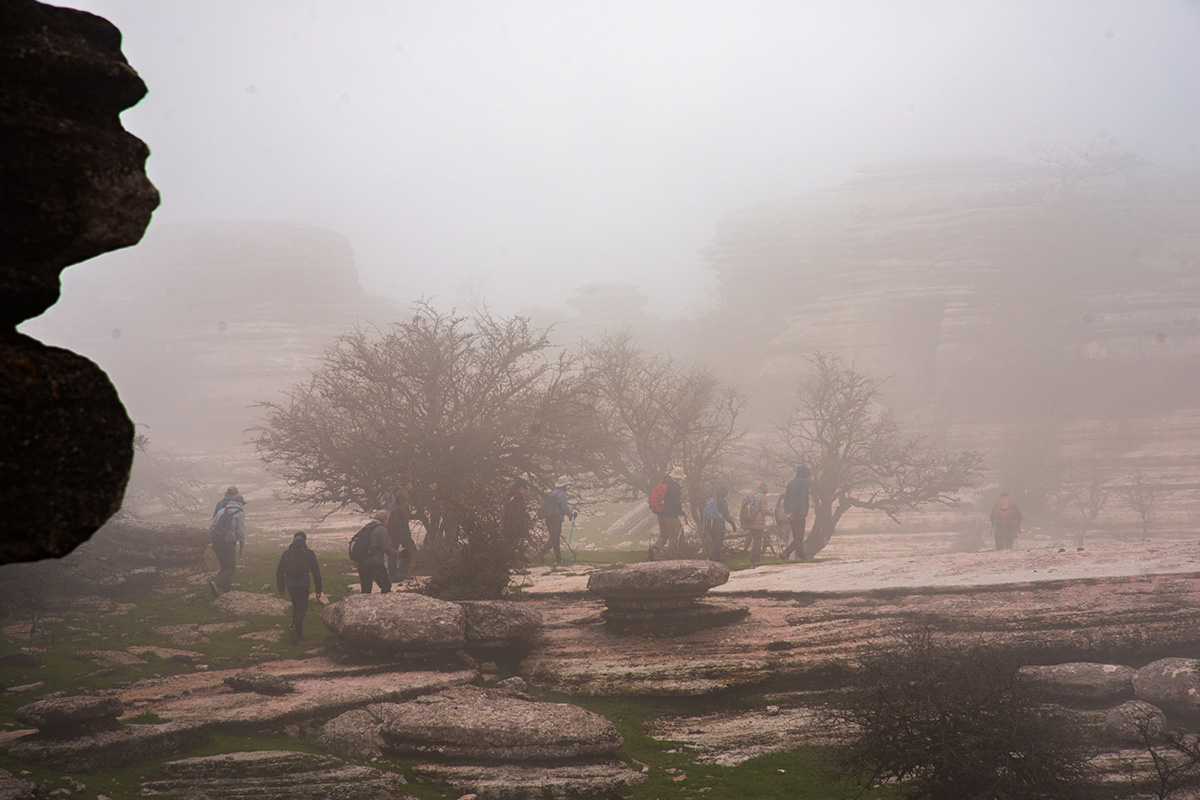
I've made that journey many times, and El Torcal still has the same effect on me. Clear winter light can reveal every detail in the limestone, while cloud and mist can transform it into something altogether more mysterious.
Our walk begins near the visitor centre and takes us through some of El Torcal's most characteristic scenery, from extraordinary limestone formations and enormous mountain views to the narrow passages of the Labyrinth.
But this isn't really a walk to rush through. The pleasure comes from slowing down and looking properly, because almost everything around us is part of a story that began when this mountain was still beneath the sea.
When This Was the Bottom of a Sea
To understand El Torcal, we have to go back around 200 million years, when this part of Andalucía looked very different. Instead of mountains, there was a sea, part of the ancient Tethys Ocean that once separated large areas of Europe and Africa.
Over millions of years, calcium-rich sediments accumulated on the seabed and eventually became the limestone we walk on today. Evidence of that distant marine world remains in the rocks as fossils, including the distinctive spiral shells of ammonites.
Much later, movements within the Earth's crust lifted these former seabeds high above sea level as the mountains of southern Spain were formed. While limestone in many surrounding mountains was tilted and folded, much of the rock at El Torcal remained broadly horizontal.
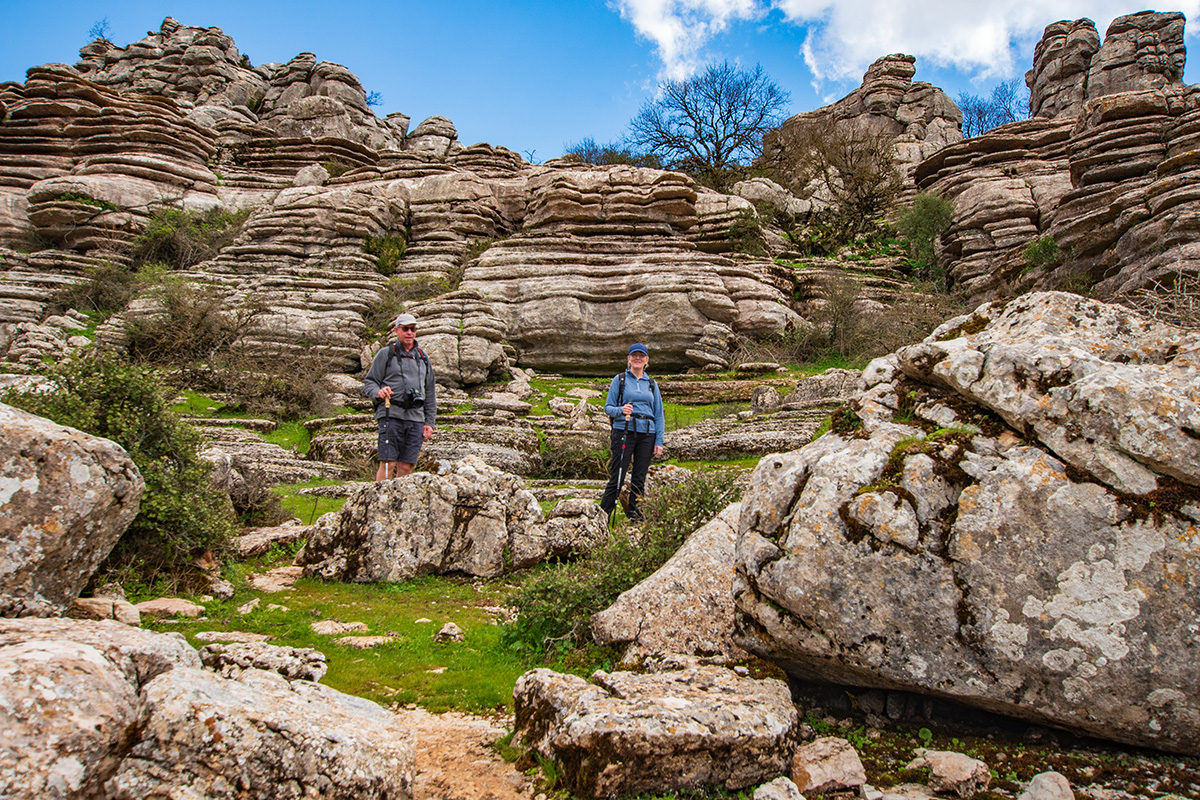
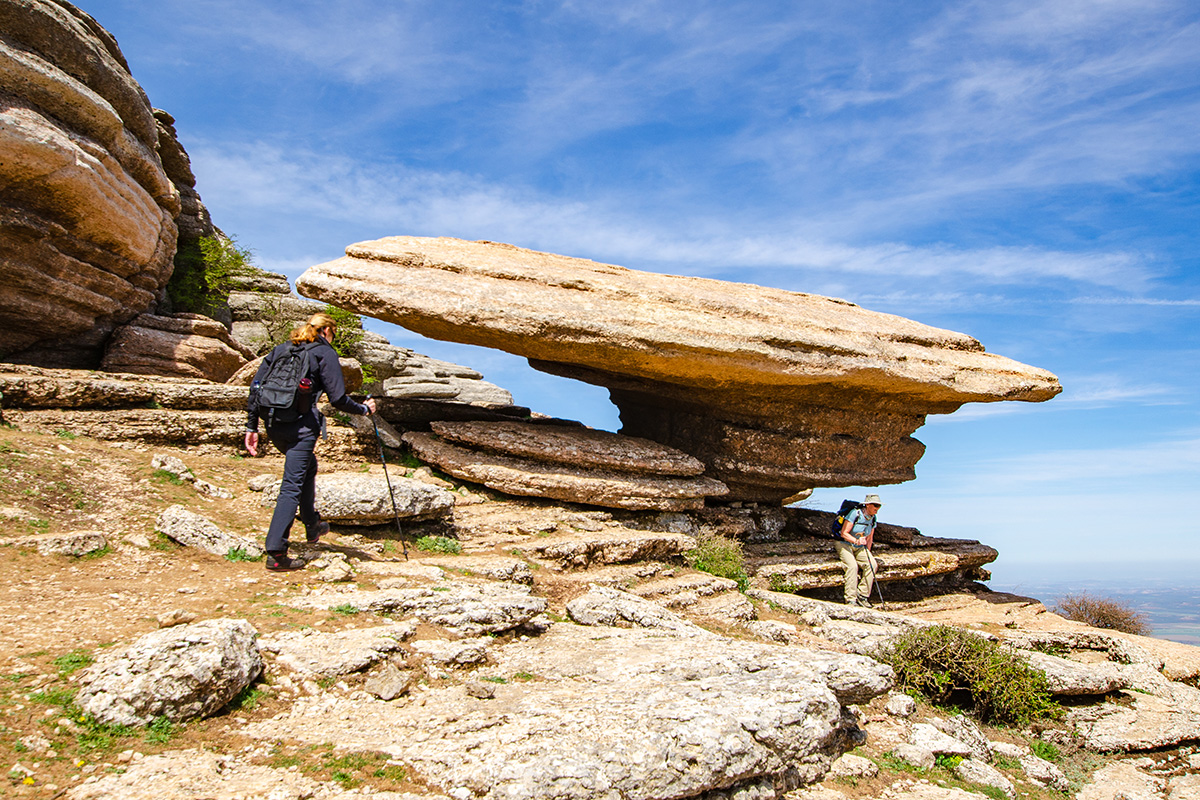
We can see the result all around us in the extraordinary piles of horizontally stacked rock that often look rather like enormous pancakes.
That horizontal structure had another consequence. Once exposed to the elements, the limestone began an extraordinarily slow process of transformation.
Sculpted by Water
Much of the landscape we see today is the result of rainwater slowly working its way into the limestone over millions of years.
As rain passes through the atmosphere and soil, it becomes slightly acidic. When it reaches the limestone, it slowly dissolves the rock along its natural joints and fractures, widening tiny cracks and working along the weaker boundaries between the horizontal layers.
The results are everywhere as we walk through the Seven Tables. Great slabs of limestone sit one above another, creating the characteristic pancake formations, while deeper fractures divide the rock into towers, corridors and isolated blocks.
And then there are the sculptures. Once you start looking, it is almost impossible not to see familiar shapes in the rocks. Over the years, many formations have acquired names inspired by what people think they resemble, from animals and human figures to everyday objects. Some are immediately convincing; others require considerably more imagination.
Perhaps the best known is El Tornillo, or the Screw, whose stacked layers have made it one of El Torcal's symbols. The formation itself is protected as a Natural Monument. But part of the fun is not always being told what you're supposed to see. Give a group of walkers the same formation and quite often several completely different suggestions will emerge. By now, the strange shapes around us begin to make a little more sense.
Looking Beyond El Torcal
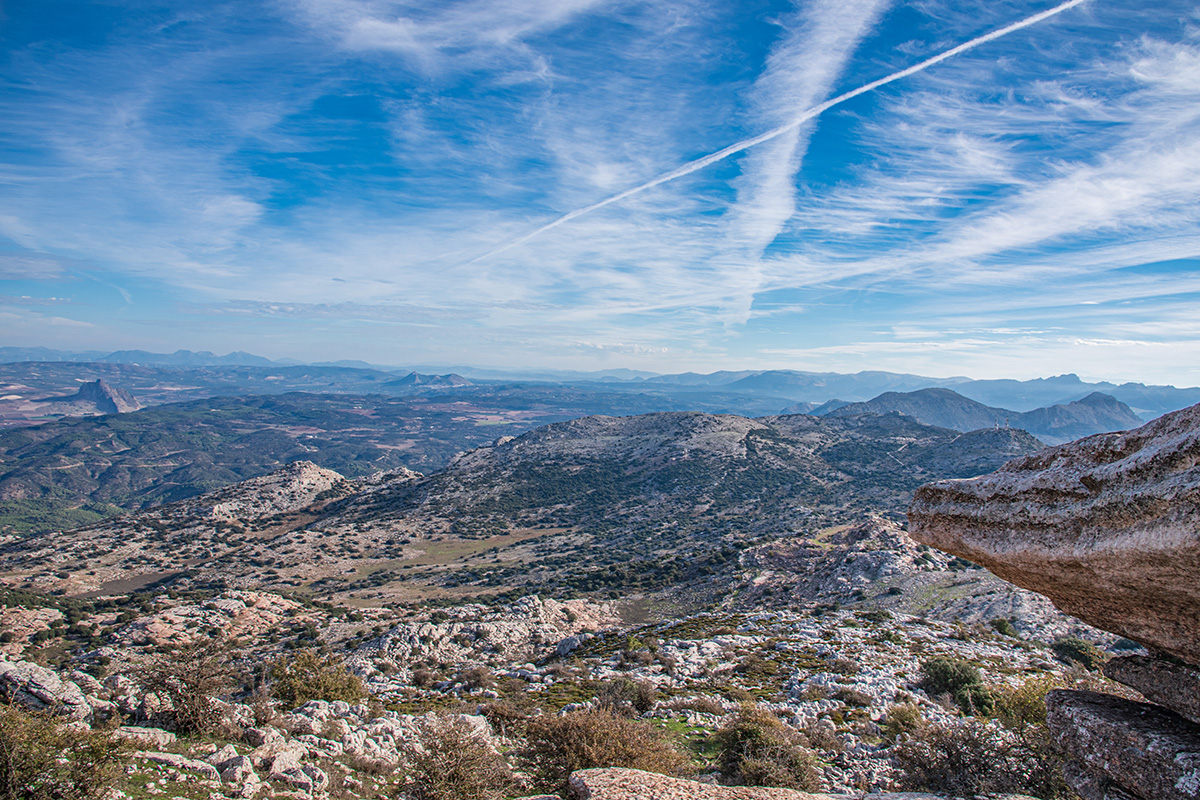
For all the fascination of the rocks around us, some of the finest moments on this walk come when we look beyond them. As we make our way around the Seven Tables, enormous views suddenly open across the surrounding landscape.
Looking north and east, the broad Antequera depression spreads out beneath us, with Antequera itself in the distance and mountain ranges continuing far beyond. La Maroma is one of the more recognisable summits, while on particularly clear days we can see as far as the Sierra Nevada, its highest peaks sometimes still carrying snow.
Closer to us is another unmistakable landmark, Peña de los Enamorados, the great limestone mountain whose distinctive profile has given it the familiar nickname of the Indian's Head. It also connects El Torcal with a much older human story.
Since 2016, El Torcal and Peña de los Enamorados have formed part of the UNESCO World Heritage-listed Antequera Dolmens Site. Their inclusion isn't simply because they provide a spectacular backdrop. Both were important landmarks within the landscape understood and used by the prehistoric communities who built the dolmens thousands of years ago.
It's an extraordinary contrast. A few moments earlier we might have been examining a fossil or trying to decide what a particular rock sculpture resembles. Then we look up and suddenly find ourselves contemplating a landscape stretching across a huge part of inland Andalucía.
People Amongst the Rocks
Despite its rugged appearance, people have lived in and used El Torcal for thousands of years. Cueva del Toro, one of the caves within the massif, preserves evidence of Neolithic occupation stretching back to around the sixth millennium BC.
Later generations found different uses for the plateau. Stone was quarried, livestock grazed amongst the limestone, and people learnt to make a living from what must often have been a demanding environment.
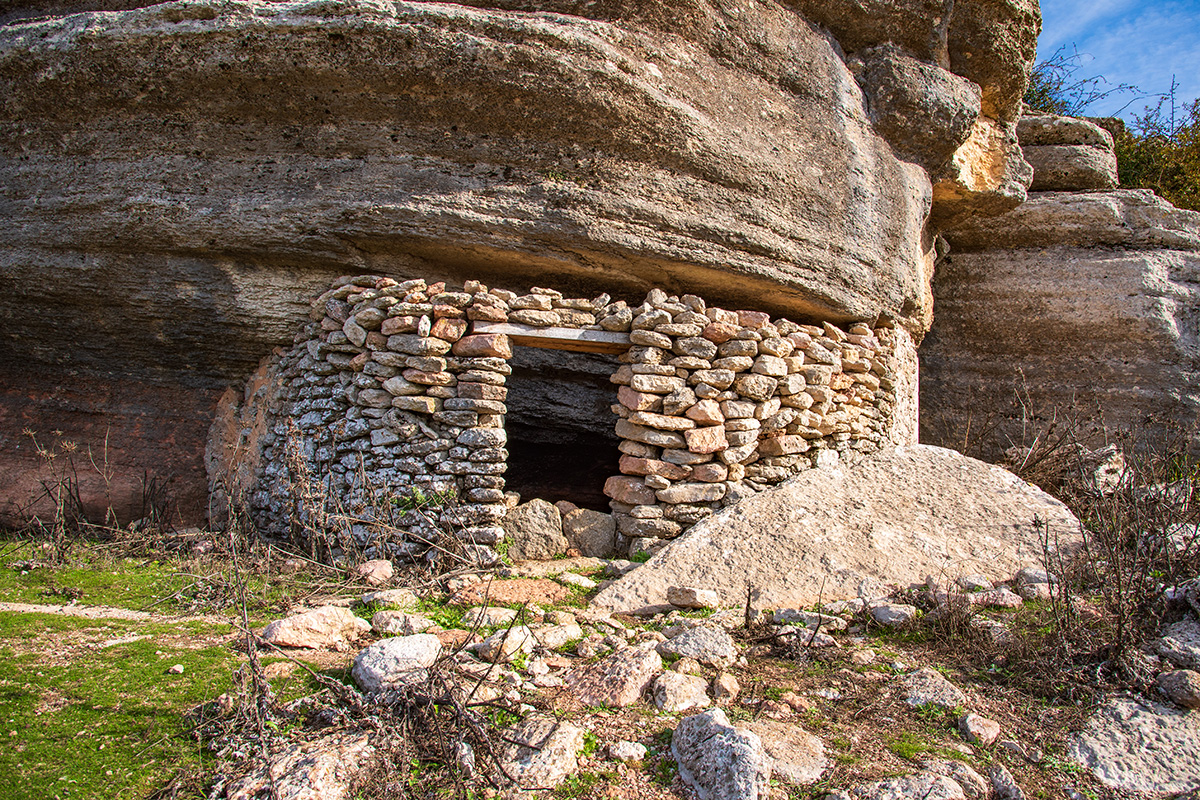
We encounter one of the most tangible reminders of that history as we cross a quieter, more open part of the plateau. Beside an old crossroads through the mountains are the remains of a stonemason's refuge, associated with the eighteenth-century master stonemason Juan González Rubio. Built beneath a natural rock overhang, it sheltered those working the limestone far from the settlements below.
Around the refuge are traces of the work itself, including pieces of shaped stone and millstones, some apparently abandoned before they ever left the mountain. After spending much of the walk admiring what millions of years of natural processes have done to the limestone, there is something quite different about seeing evidence of people working that same rock by hand. It's an easy place to walk past without appreciating what we're looking at, but stopping here adds another layer to El Torcal's story.
More Alive Than It Looks
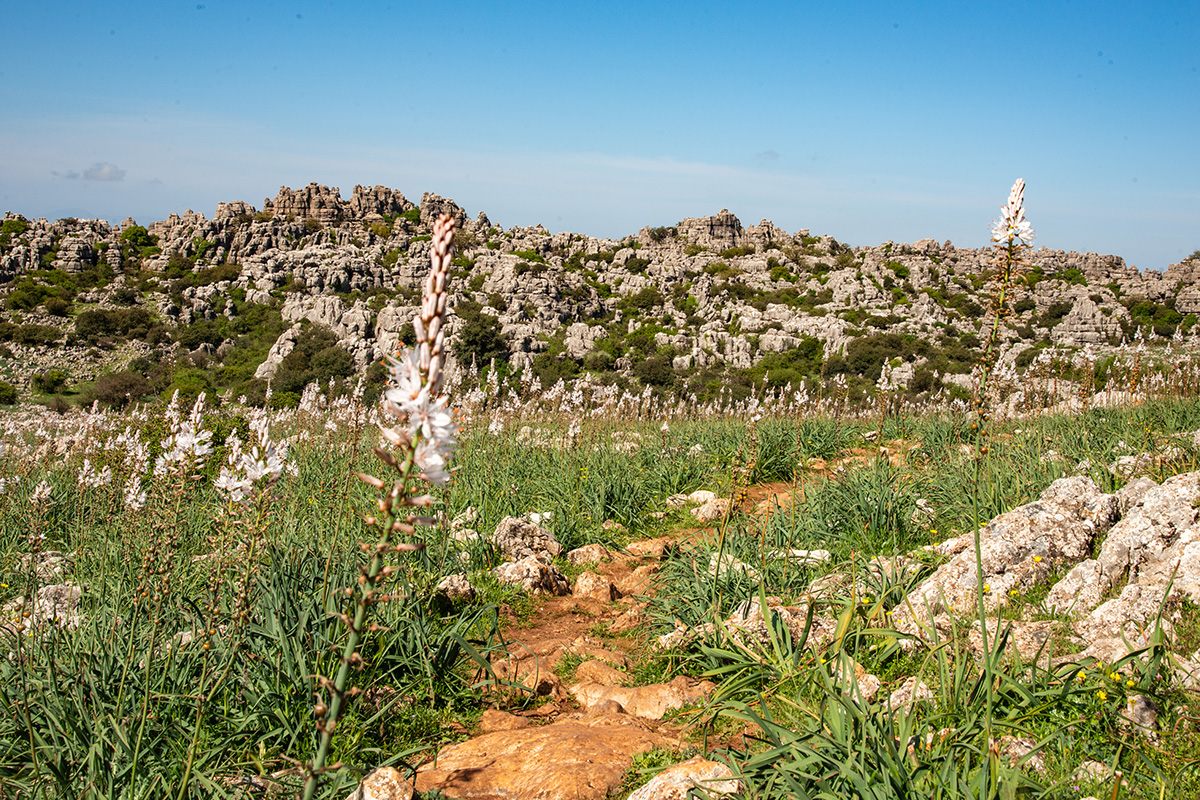
With so much limestone around us, it would be easy to imagine El Torcal as a rather barren landscape. Walking through it, particularly in spring, quickly changes that impression. Flowers appear between the rocks and in pockets of soil, while great swathes of white asphodel can cover some of the more open ground. Look a little more closely, and there are orchids too.
Above us, griffon vultures are a familiar sight, circling around the high cliffs and using the rising air to gain height with barely a movement of their wings. At other times it is the sound that surprises us, with birdsong carrying through a landscape that can appear, from a distance, to be dominated entirely by stone.
As we drop into the Labyrinth, the character of the walk changes again. The great panoramas disappear, and the landscape closes around us. We follow narrow passages between limestone towers, duck beneath overhanging rock and pick our way through corridors slowly enlarged along fractures in the limestone.
This is also where I most often encounter Spanish ibex. Completely at home amongst the rocks, they can appear remarkably unconcerned by our presence, watching us for a while before quietly disappearing back into the maze of limestone.
The Labyrinth feels like an appropriate place to finish our journey through El Torcal. For much of the walk we've stood back and looked at the geology; here, we are walking right through it.
El Torcal is impressive whether we understand any of this or not. But by the time we emerge from the Labyrinth and make our way back towards the visitor centre, those extraordinary rocks no longer seem quite so mysterious. We've spent a few hours walking through a landscape whose story has taken around 200 million years to unfold.