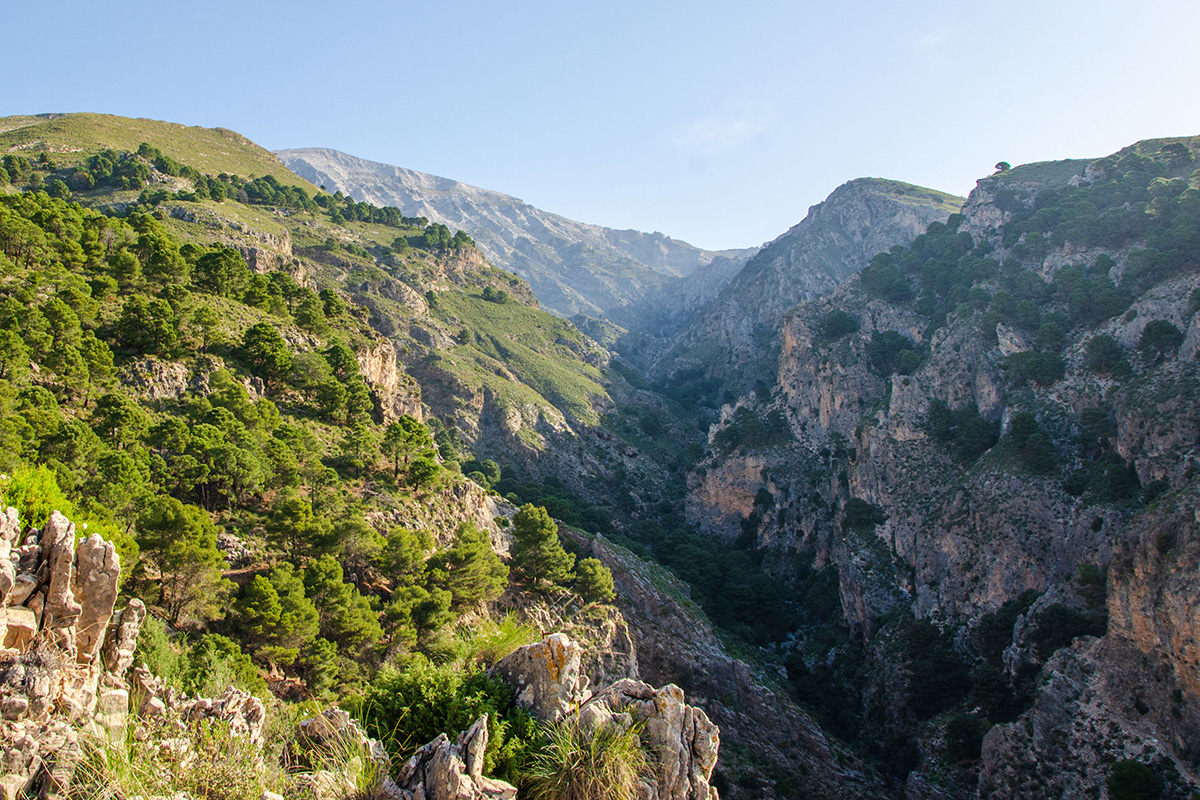
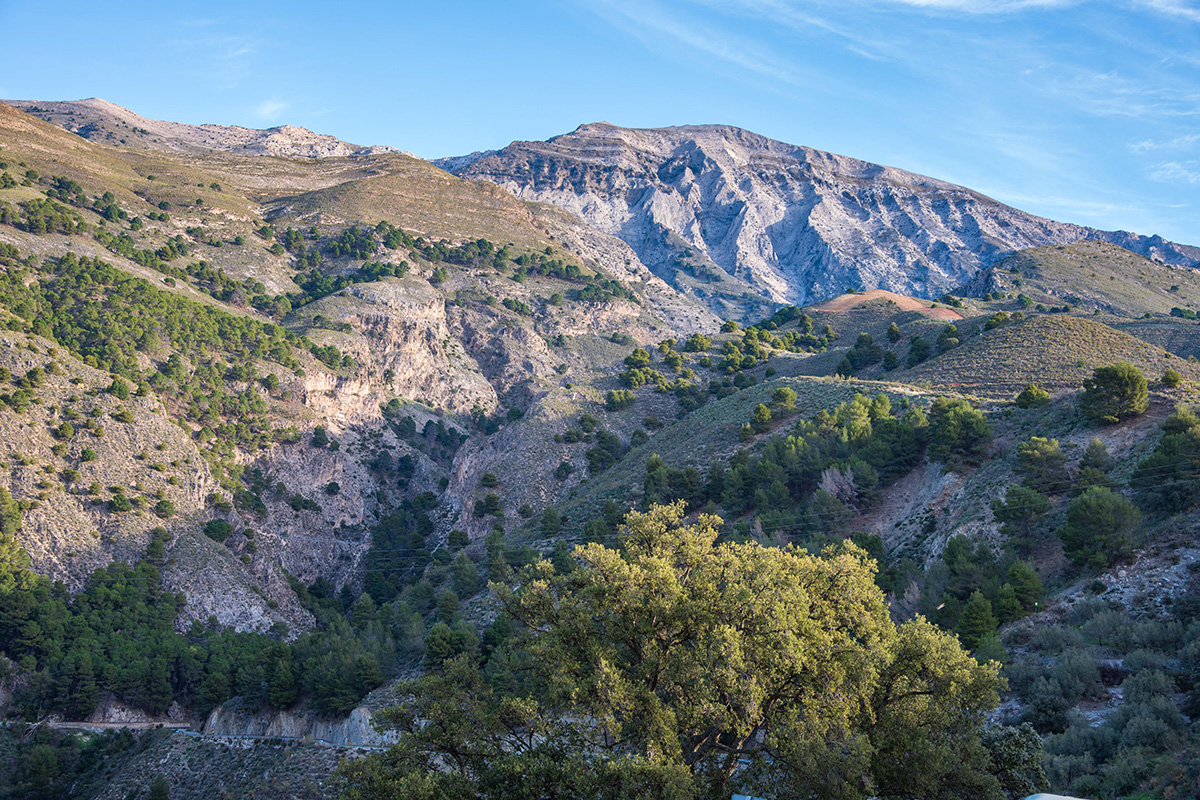
The southern slopes below La Maroma are not an easy landscape to cross. Deep ravines cut through the mountains, steep rock faces interrupt the gentler slopes, and water has carved routes of its own towards the coast. Yet people have lived, worked and travelled through this part of the Axarquía for centuries.
This walk reveals some of the different ways they have done it. Water has been carried around the contours of the mountain, its force used to power mills, old paths have connected villages across difficult terrain, and more recently a suspension bridge and carefully engineered trail have created a route across the Almanchares Gorge.
The solutions belong to very different periods, but the problem behind them is remarkably similar. Faced with a landscape that doesn't always offer an obvious route, people have repeatedly found ways to work with it rather than simply turn back.
Following the Water
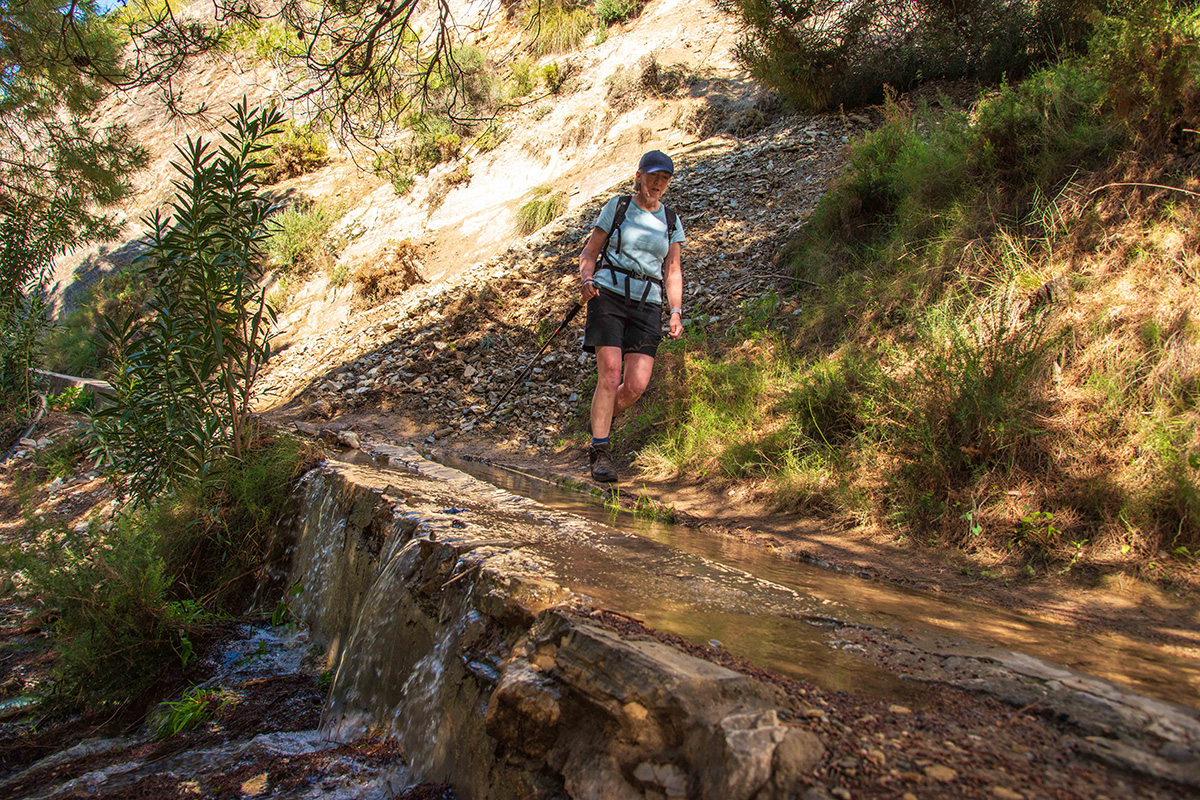
One of the first solutions we encounter is also one of the oldest. Above Canillas de Aceituno, an acequia carries water from the Almanchares around the mountainside, following the contours rather than taking the much steeper route towards the valley below.
The principle is simple: maintain a gentle enough gradient and gravity does the work. But standing on these steep slopes, with La Maroma rising above and the land falling away below, it's easier to appreciate the ingenuity involved. Instead of fighting the shape of the mountain, the channel works with it, carrying water across terrain that would otherwise send it quickly downhill.
That water was essential to communities such as Canillas de Aceituno, supporting agriculture and a local economy that once included silk production, with mulberry leaves used to feed silkworms. The crops and industries have changed over the centuries, but water still runs through sections of the acequia today.
It's much more than simply an old irrigation channel. Long before anyone contemplated spanning the Almanchares Gorge with a suspension bridge, people living here had already learnt an important lesson about this landscape: sometimes the cleverest way through isn't the most direct one.
Turning Water into Work
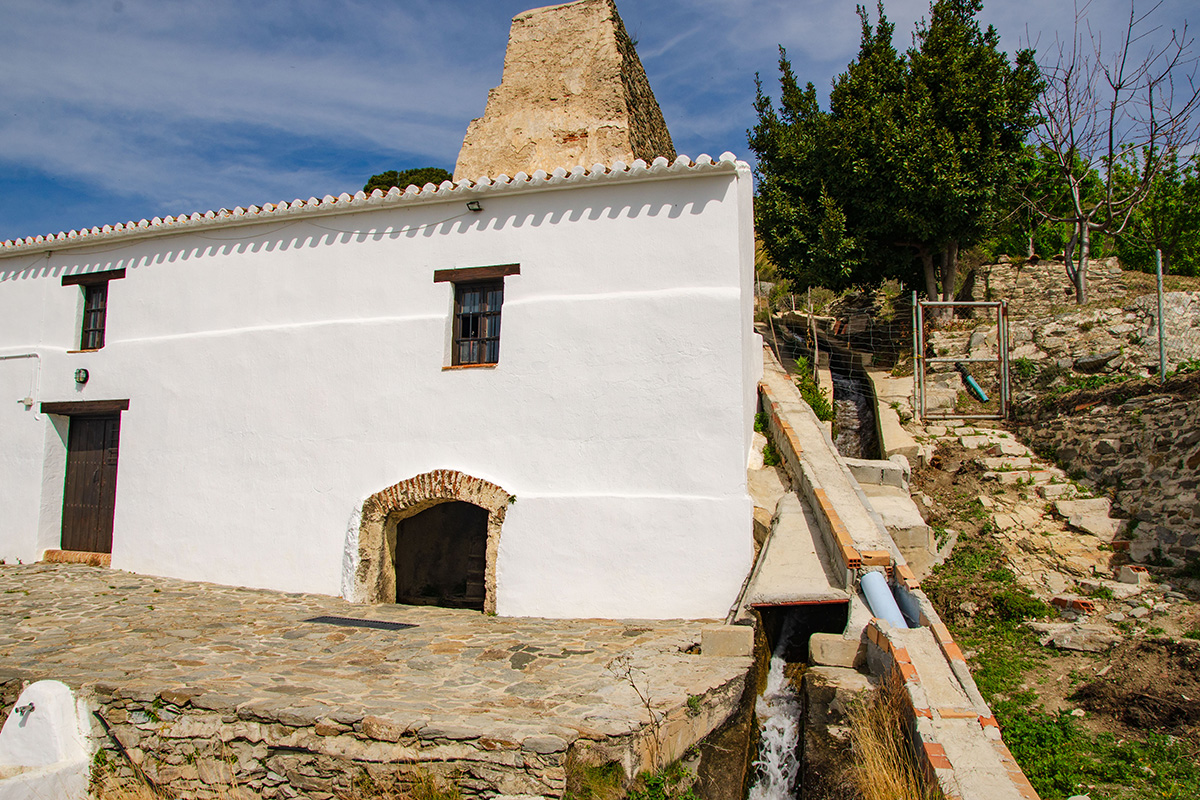
Water wasn't only needed for homes and crops. In these mountain villages, people also learnt to use its movement to provide power. Near Sedella, the remains of an old flour mill are another reminder of how the landscape itself could be put to work.
Water was channelled towards mills and allowed to drop, using the change in height to drive the machinery that ground grain into flour. In a landscape where steep slopes create so many difficulties, the mill turned one of those difficulties into an advantage.
Seeing the old mill towards the end of the walk takes me back to the acequia we followed much earlier. Both relied on controlling the same basic resource in different ways: one carried water carefully across the mountainside, while the other used its fall to create power. Neither required changing the mountain completely; the ingenuity was in understanding what the landscape already offered and finding a way to use it.
When the Mountain Gets in the Way
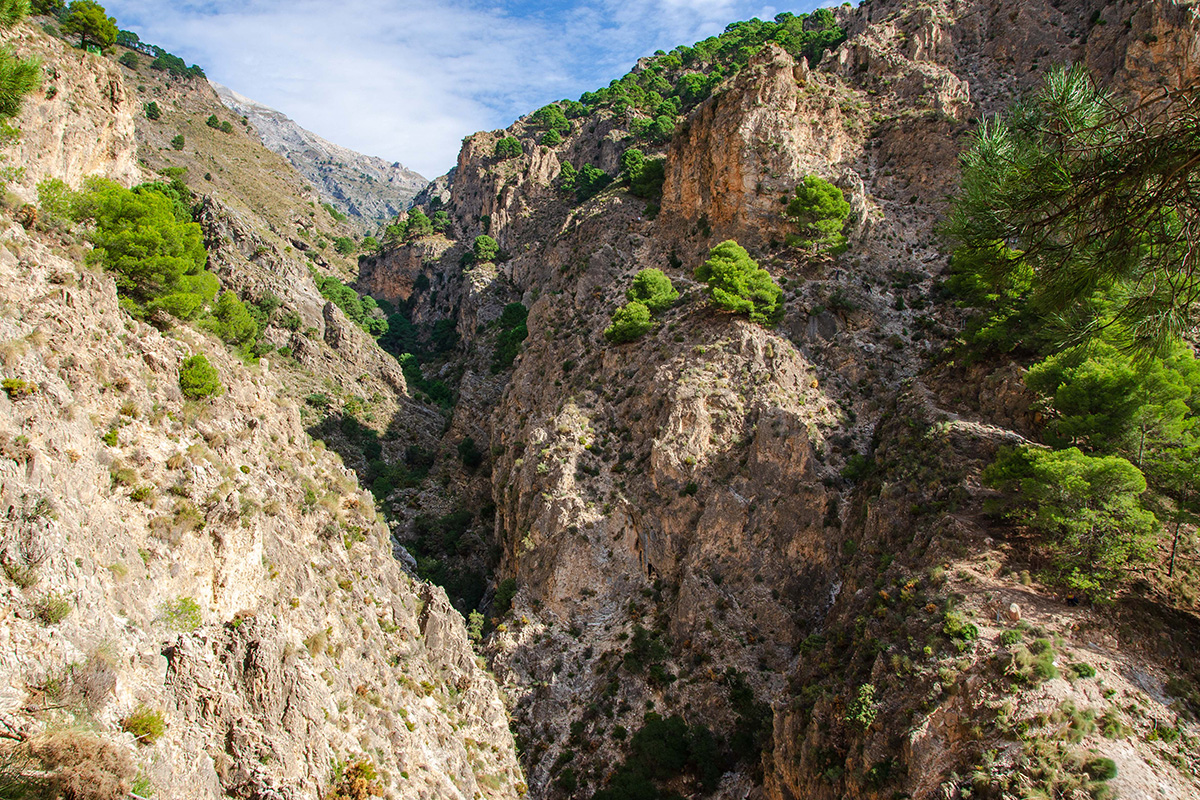
Eventually, following the contours is no longer enough. The Almanchares cuts deeply into the southern slopes below La Maroma, creating a gorge that drops sharply between the mountain shoulders on either side.
It's a spectacular place to stop. Looking up the gorge, La Maroma towers above us, its layered rock faces forming an imposing backdrop. But what makes this particular view interesting is what lies across the gorge. On the opposite slopes are paths and tracks continuing towards Sedella, seemingly close enough to reach, yet separated from us by the deep ravine below.
For many years, that was effectively where this route ended. Walkers could follow the acequia and mountain path from Canillas de Aceituno towards El Saltillo, enjoy the views and pools around the Almanchares, and then return the way they had come. The gorge prevented a straightforward continuation across the mountains.
When the GR-249, Málaga's long-distance walking route, was developed through this part of the Axarquía, that same obstacle created a problem. A route intended to connect the mountain villages couldn't simply continue across the Almanchares. The landscape had finally presented something that couldn't be solved by following an old path or working gently around the contours. A different kind of solution was needed.
Building the Missing Link
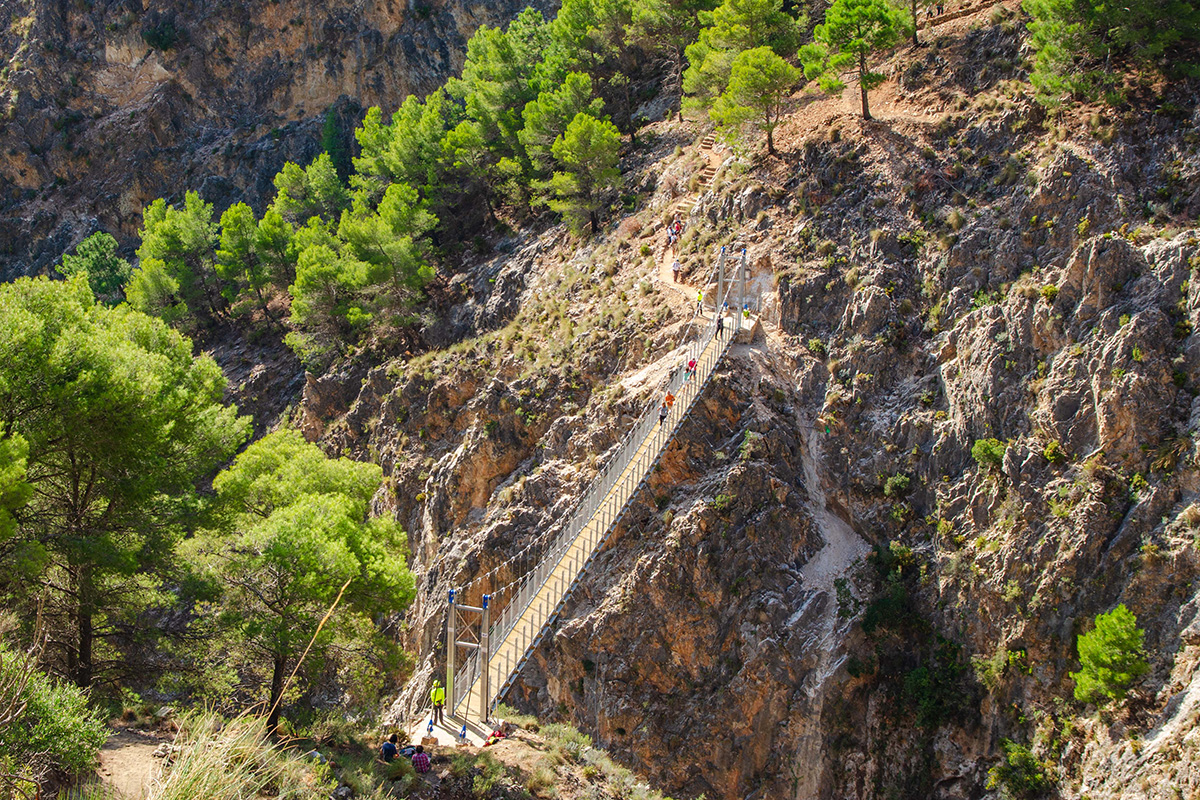
The solution arrived in 2020 with the construction of a suspension bridge across the Almanchares Gorge. Around 50 metres long, it formed part of a wider project to reroute this section of the GR-249 and create a direct walking connection through the mountains between Canillas de Aceituno and Sedella.
The bridge had to be built much lower in the gorge than the path we approach it on. From the western side, a new trail zigzags steeply downhill before the bridge finally appears below us, stretched between the rock faces on either side.
Crossing it is undoubtedly one of the memorable moments of the walk. The gorge drops away beneath your feet, La Maroma rises dramatically behind, and the movement of the suspension bridge adds a little nervousness to those first few steps. I've crossed it with plenty of people, and it's always interesting to watch that initial uncertainty gradually give way to smiles once they're out there.
But what I find most impressive about the project isn't actually the bridge itself. Crossing the gorge solved only half of the problem. We still have to regain all the height we've just lost, and on the opposite side a steep rock buttress appears to leave very little room for a path at all.
Beyond the Bridge
The section beyond the bridge is probably my favourite part of the walk. From the level of the crossing, the path has to find a way back onto the broad mountain shoulder high above us.
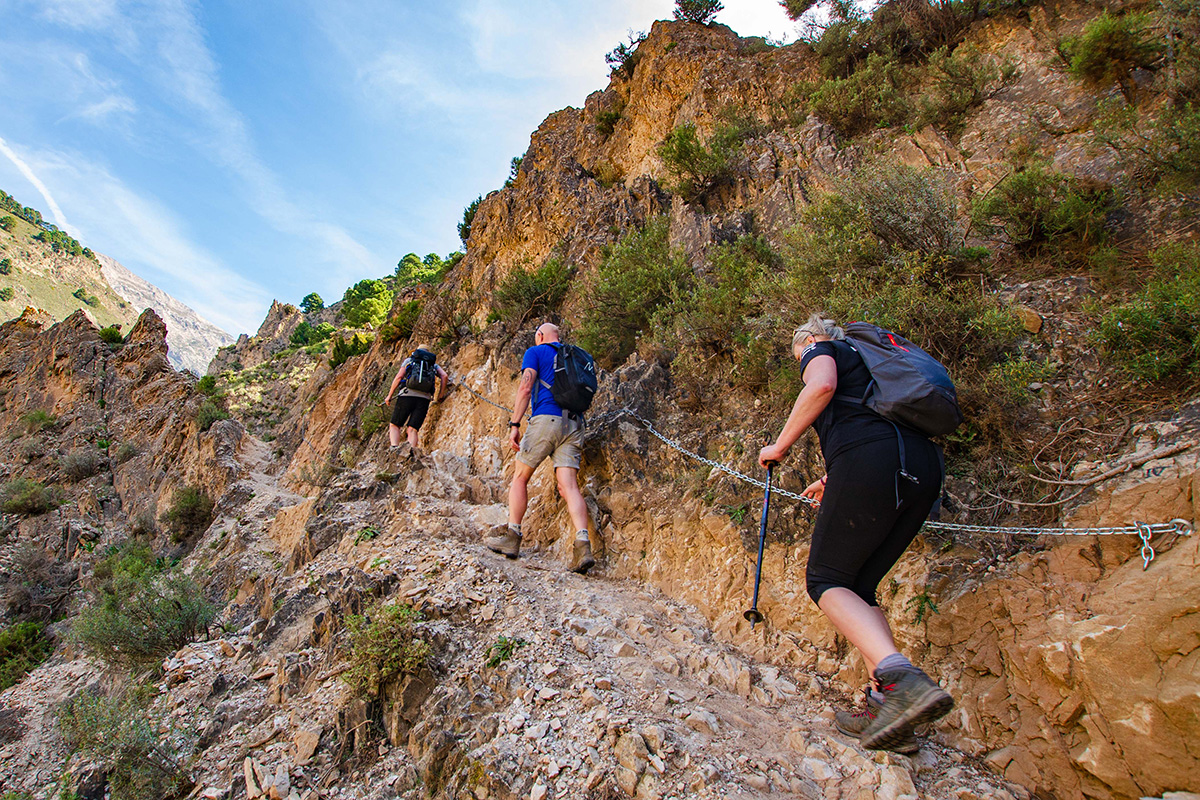
At first, it follows the base of the rock buttress, with the Almanchares Gorge dropping steeply away beside us and increasingly impressive views opening towards La Maroma. Then the route changes direction and begins to climb.
This is where the ingenuity becomes obvious. Rather than trying to force a path directly up the rock face, the route uses natural weaknesses in it. Steps lead into narrow gullies, short sections of chain provide additional support, and the path gradually threads its way upwards through terrain that, when viewed from across the gorge, hardly seems to contain a route at all.
There is certainly a sense of exposure, and it's a section that deserves concentration rather than rushing. But it's also wonderfully exhilarating. I particularly enjoy the moment when we emerge from the final gully and suddenly find ourselves back on more familiar mountain terrain, now higher than the path we originally approached the gorge on.
From there, the landscape opens again towards the Mediterranean before the route continues towards Sedella. Looking back across the Almanchares, it's possible to appreciate what the bridge and path have actually achieved. They haven't made the mountain disappear or removed all of its difficulties. They've simply found a remarkably clever way through them.
The Same Problem, Different Solutions
The suspension bridge, impressive though it is, is just one part of a much bigger story. Long before it was built, people living in these mountains were already finding ways to overcome the difficulties of the landscape around them.
They carried water around steep slopes, used its fall to power mills and created paths between villages. Today, the bridge across the Almanchares and the carefully engineered trail beyond it use very different techniques, but they continue much the same tradition.
Perhaps that's what makes this walk so satisfying. We aren't simply passing through a spectacular mountain landscape; we're repeatedly seeing how people have learnt to work with it. Sometimes the solution is an irrigation channel quietly following a contour. Sometimes it's a path finding a weakness in the rock. And sometimes it's a suspension bridge stretched across a gorge.
The methods may have changed enormously, but the challenge hasn't.