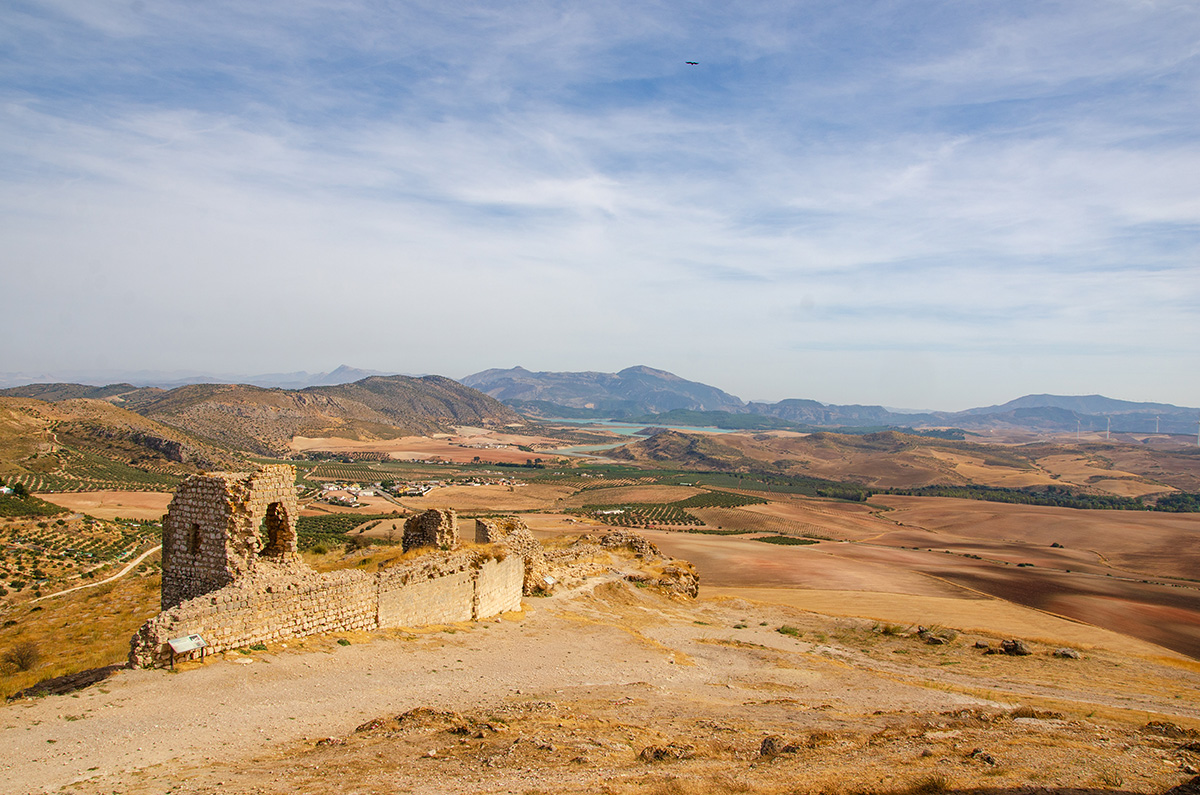
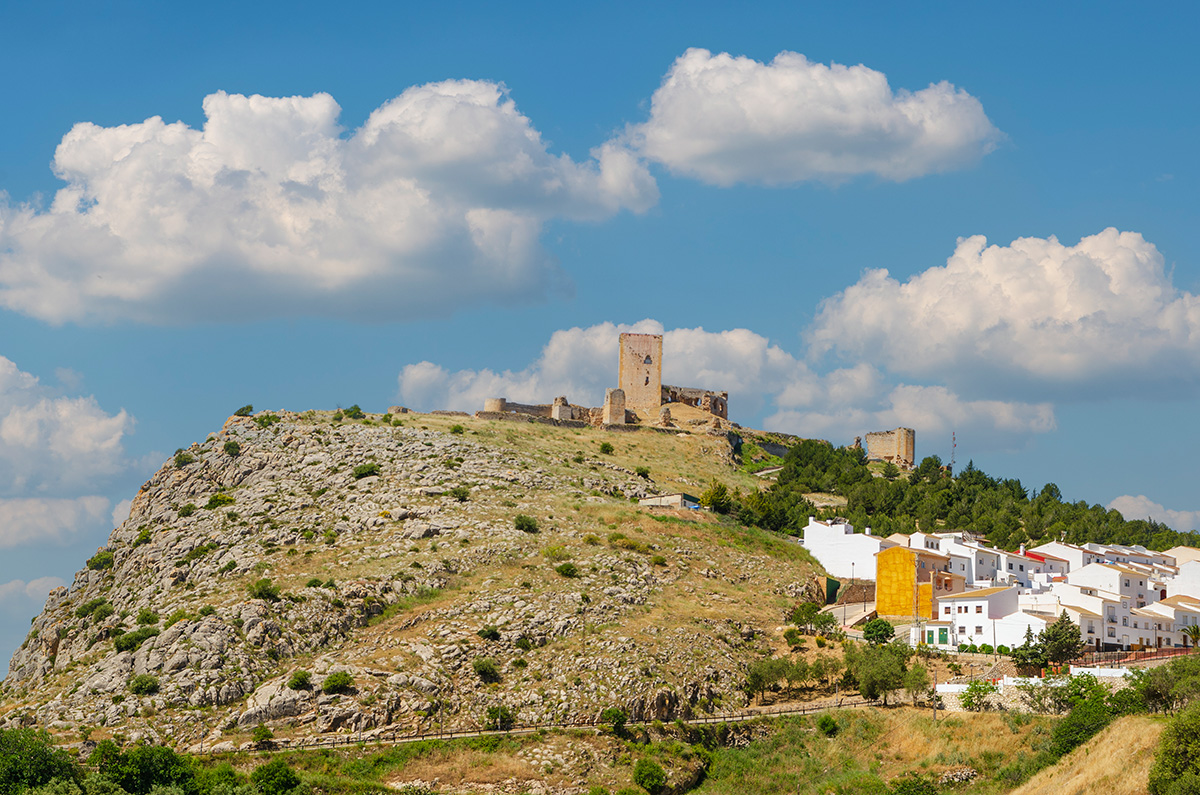
At first sight, the countryside around Teba appears timeless. Limestone hills rise above olive groves, rivers wind through the valleys and, from the heights above the town, the landscape stretches towards the mountains of inland Málaga. Yet almost everything we see is the result of enormous change.
A walk from Tajo del Molino to Teba takes us through a story spanning millions of years. Ancient seabeds became mountains, rivers cut through limestone, prehistoric people found shelter in caves, and successive communities settled the surrounding valleys. Eventually the story leads to the fortress above Teba and an extraordinary event in 1330, when a Scottish knight carrying the heart of Robert the Bruce arrived in this corner of Andalucía.
An Ancient Sea Beneath Our Feet
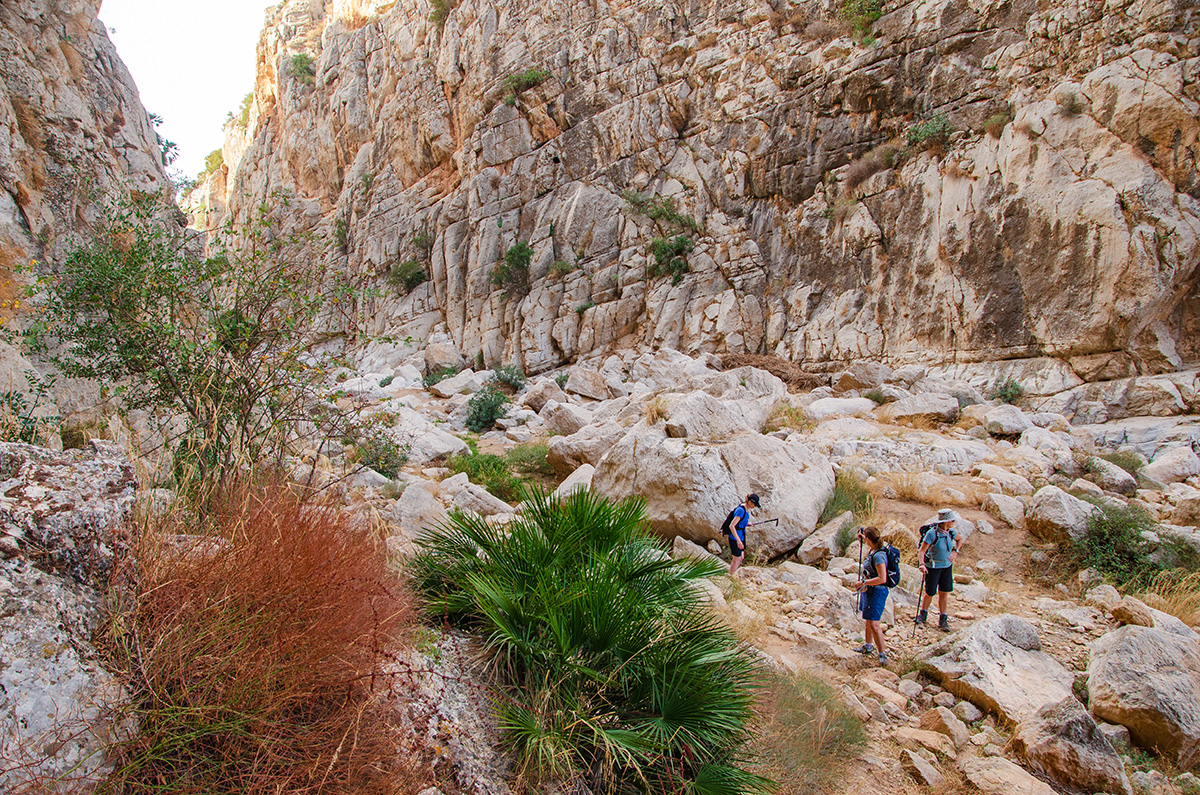
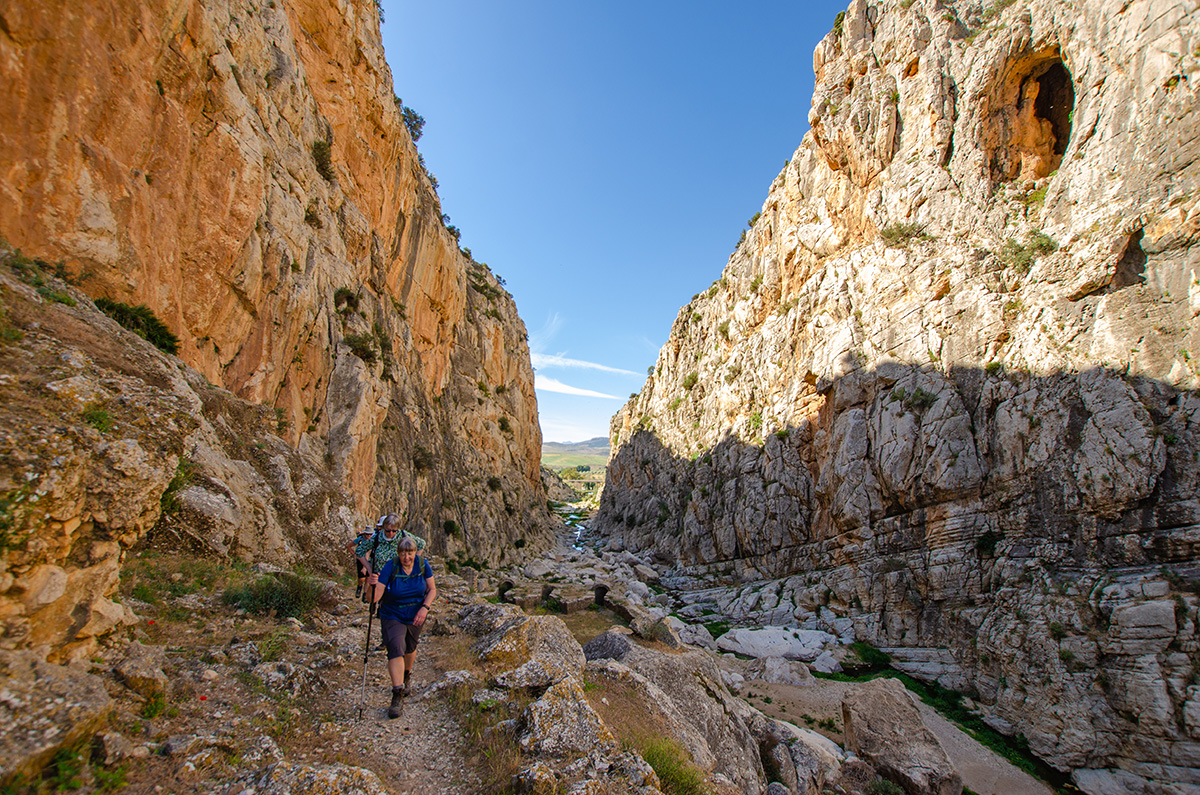
Our journey begins in Tajo del Molino, a narrow limestone gorge cut by the Río de la Venta. The rocks surrounding us began their story during the Jurassic period, when sediments accumulated beneath an ancient sea. Over immense periods of time, these sediments hardened into limestone before movements of the Earth's crust folded, fractured and eventually raised them as part of the developing Betic Mountains.
Millions of years later, southern Spain's geography was still changing. Around six to seven million years ago, marine corridors cut through this evolving landscape, connecting the Atlantic and Mediterranean. Continued tectonic movement progressively closed these passages, and the landscape we recognise today began to emerge.
Water then became one of the principal forces shaping the limestone. Flowing through fractures and dissolving the rock, it helped create the gorge, caves and springs around Tajo del Molino. Even today, an occasional ammonite amongst the rocks provides a tangible reminder that the limestone mountains surrounding Teba began beneath the sea.
The First People of Teba
The same geological processes that created the gorge also produced places where people could find shelter. Above the Río de la Venta lies the Las Palomas cave complex, where archaeological investigations have revealed an extraordinary sequence of human activity extending back tens of thousands of years.
Neanderthals repeatedly occupied these caves more than 50,000 years ago, followed much later by modern humans. The caves were used again during the Neolithic and Bronze Age, and red prehistoric paintings survive within part of the complex. Rather than representing one brief period of occupation, Las Palomas records repeated human returns to the same landscape over an immense period of time.
Its attraction is not difficult to understand. The surrounding country offered water, shelter, animals, and stone from which people could make tools. Long before a town called Teba existed, this small corner of Andalucía already provided people with many of the things they needed to survive.
Following the Water Towards Teba
Leaving the gorge, the walk enters a more open landscape where we find evidence of another relationship between people and water. The remains of an old flour mill stand above the gorge, with surviving channels and waterworks showing how flowing water was eventually controlled and used to provide power. A natural resource that had sustained communities for thousands of years had also become something that could be harnessed.
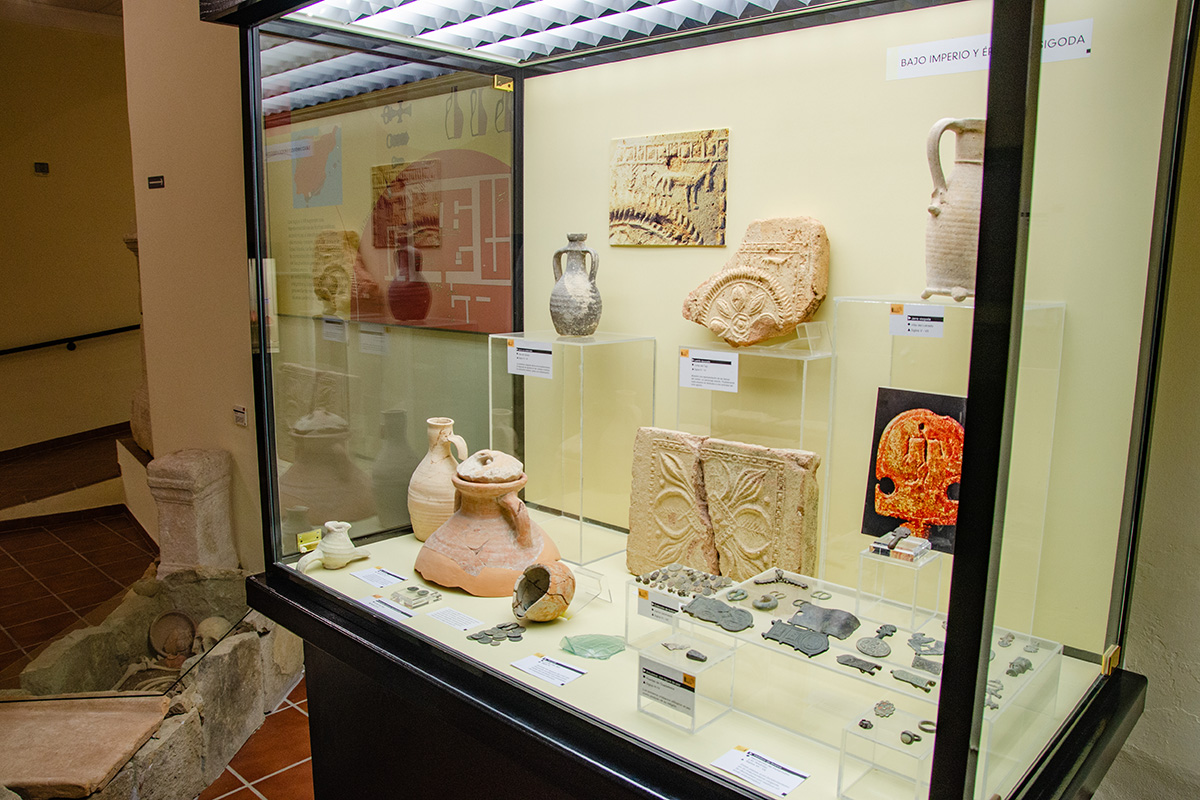
As we continue towards Teba, the archaeological story unfolds. Evidence of Iberian settlement and significant Roman activity in the surrounding area, along with objects discovered across this landscape, can now be seen in Teba's municipal museum alongside finds from Las Palomas and later periods.
The museum provides an effective summary of the journey we have made. Objects separated by thousands of years have been brought together from a surprisingly small geographical area, demonstrating just how long people have lived in and moved through the countryside surrounding Teba.
A Fortress on the Frontier
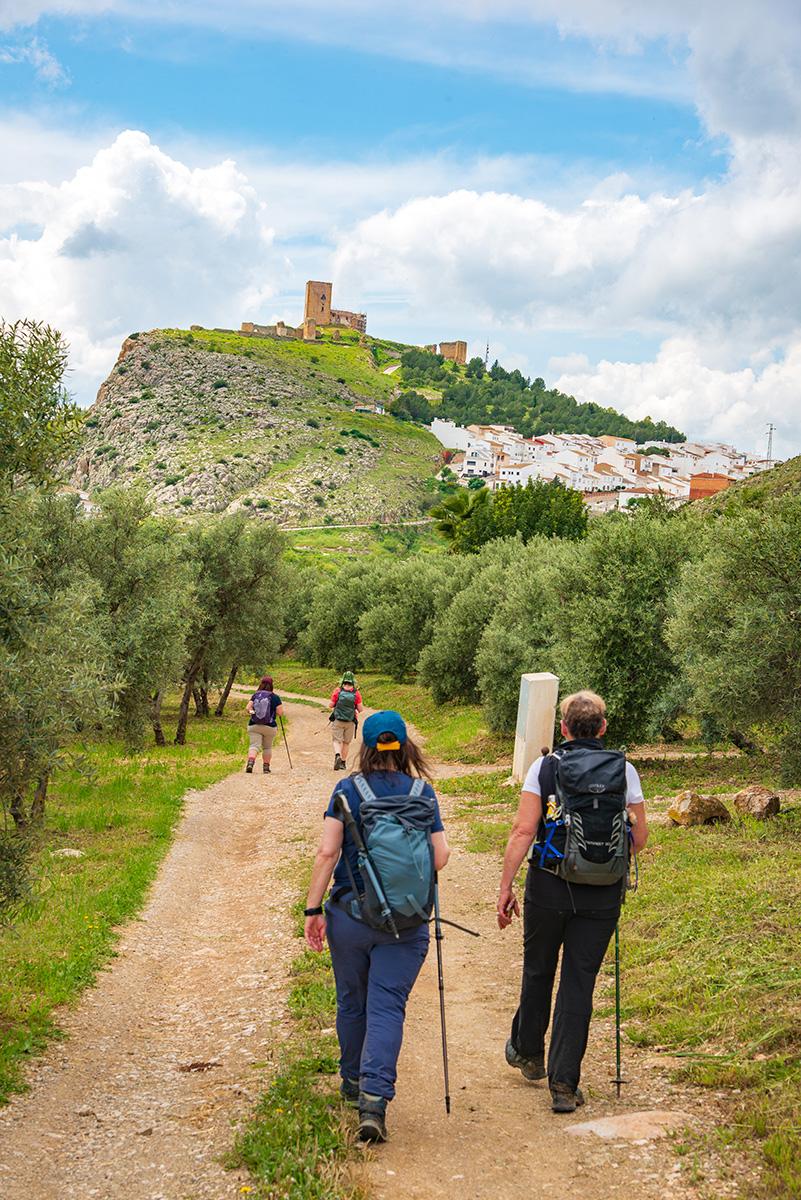
Above the modern town stands the Castillo de la Estrella. Developed and altered over several periods, the fortress became particularly important when Teba lay close to the contested frontier between Christian Castile and the Nasrid Kingdom of Granada.
Climbing to the castle helps explain its strategic importance. From the hilltop, extensive views open across the Guadalteba countryside and towards the mountains beyond. From here, you could see routes through the surrounding valleys, and anyone controlling the fortress held an important position within the wider landscape.
During the early 14th century, that geography placed Teba directly within the struggle between the expanding Christian kingdoms to the north and Nasrid Granada to the south. In 1330, King Alfonso XI of Castile besieged the fortress. Among the foreign knights who joined his campaign was a man whose presence would create an unexpected connection between Teba and Scotland.
The Battle of Teba
Sir James Douglas had been one of the closest companions and military commanders of Robert the Bruce, King of Scots. When Bruce died in 1329, Douglas undertook a remarkable journey carrying the king's embalmed heart, fulfilling his wish that it be taken on crusade.
While travelling south, Douglas joined Alfonso XI's campaign against Teba. During the fighting, Douglas and a small group of his men became separated from the main Christian force and were overwhelmed. One Scottish account says Douglas turned back to help a fellow knight who had been surrounded, only to become trapped himself. Douglas and several of his companions were killed. Other medieval accounts differ over the precise circumstances, but all place his death within the fighting around Teba in 1330.
The story subsequently became entwined with legend. The best-known version tells of Douglas taking the casket containing Bruce's heart and throwing it towards the enemy before charging after it. It is a wonderfully dramatic image, but one that belongs more securely to later tradition than established historical fact. What we do know is remarkable enough: Douglas travelled to Spain carrying Robert the Bruce's heart, joined the campaign at Teba and died here.
Teba subsequently passed into Castilian control, although this was by no means the end of the long Christian conquest of Muslim-held Andalucía. The Nasrid Kingdom of Granada survived for another 162 years, leaving Teba as one episode in a frontier struggle that continued until the fall of Granada in 1492.
Looking Back Through Time
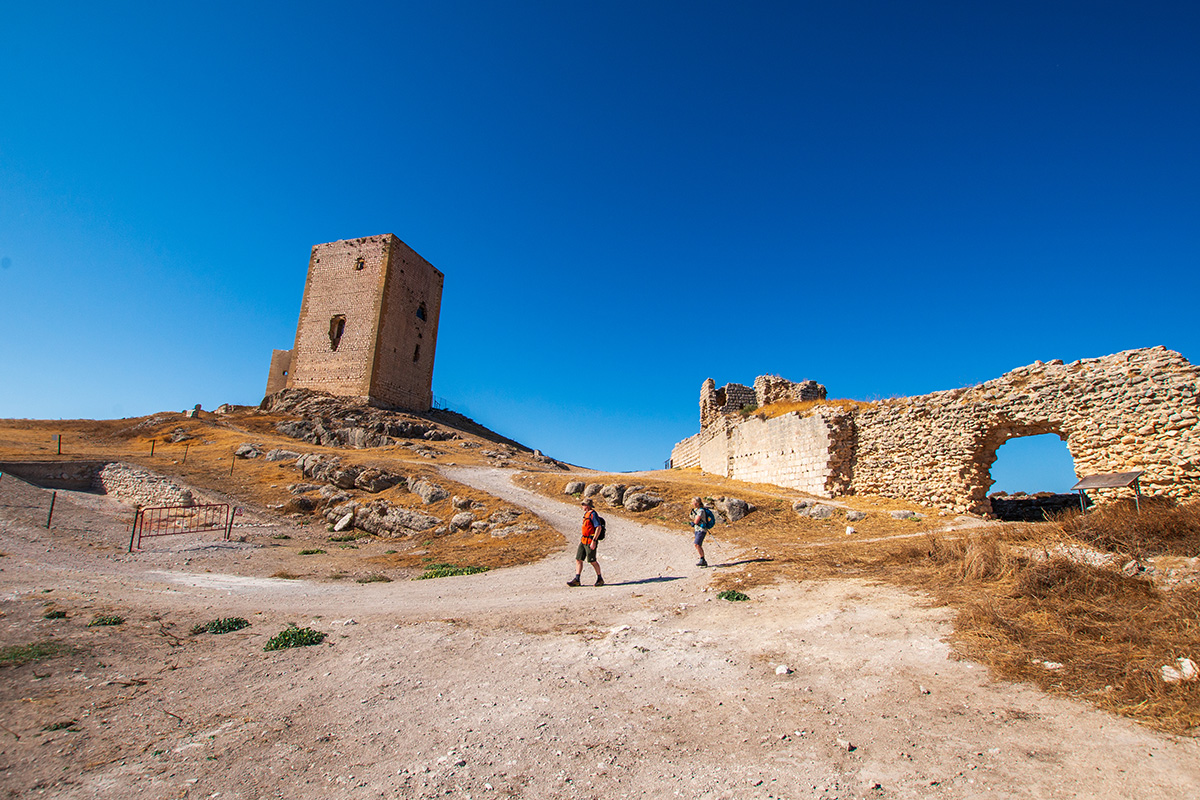
Today, the Castillo de la Estrella is a peaceful place from which to look back across the country through which we have walked. Below are limestone mountains, river valleys and olive-covered slopes, with the modern reservoir landscape stretching into the distance.
By the time we reach the castle, however, we are looking at more than scenery. The walk has taken us from a Jurassic seabed and a landscape shaped by moving continents and flowing water to caves occupied by prehistoric people, later settlements and a medieval frontier. It has eventually brought us to a battle that connected this small Andalusian town with one of the most celebrated figures in Scottish history.
In a little more than a day's walk, Teba lets us experience a remarkable sweep of geological and human history. It's a real walk through time.