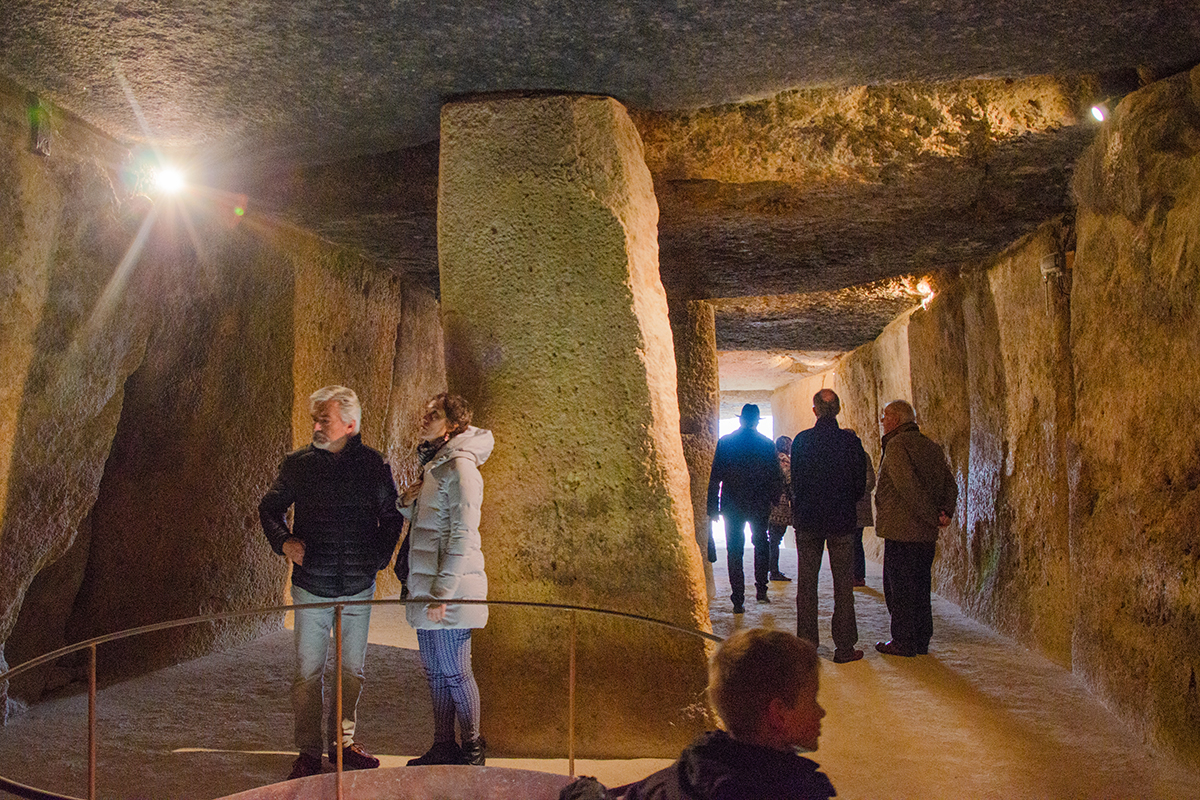
Long before there was a town called Antequera, people were already leaving their mark on this landscape. More than 5,000 years ago, communities living here built the great Dolmens of Menga and Viera, creating burial monuments that still stand on the edge of the modern town.
Menga is especially fascinating because of the direction its builders chose. Rather than following the orientation towards the rising sun found in many prehistoric monuments, its great stone passage faces Peña de los Enamorados, the distinctive mountain that rises beyond the fertile plain. Seen from Antequera, its outline resembles a human face looking towards the sky.
Archaeologists now believe that relationship was deliberate. Menga is orientated towards the Matacabras rock shelter on the Peña, where prehistoric paintings have been found, suggesting that the mountain already held special significance for the people who built the dolmen.
It's a remarkable place to begin Antequera's story. Thousands of years before Roman roads, Moorish walls or Christian church towers appeared here, people were already looking across this landscape and finding meaning in what they saw.
A Natural Meeting Place
The first communities around Antequera had chosen their location well. Beyond the symbolic importance of landmarks such as Peña de los Enamorados, they had access to a broad, fertile plain, water and natural routes through the surrounding mountains. Those same advantages would continue to attract people long after the Dolmens were built.
Antequera sits at a natural crossroads in the centre of Andalucía. Routes through this landscape connect Málaga and the Mediterranean coast with the interior, while other routes lead east and west towards Granada and Seville. Over the centuries, that position would make the area valuable for settlement, agriculture, trade and, at times, military control.
The Romans also recognised its importance. Their town of Antikaria developed here, and one of the clearest reminders survives immediately below the Alcazaba, where the remains of Roman baths can still be seen. Dating from the first century AD, the complex included hot, warm and cold bathing areas and remained in use for several centuries.
That location makes the Roman story easy to miss, but much more rewarding once you know it's there. Standing high above modern Antequera, surrounded by the remains of its later Moorish and Christian history, you can look down and see evidence of another town that existed here almost two thousand years ago.
A Fortress on the Frontier
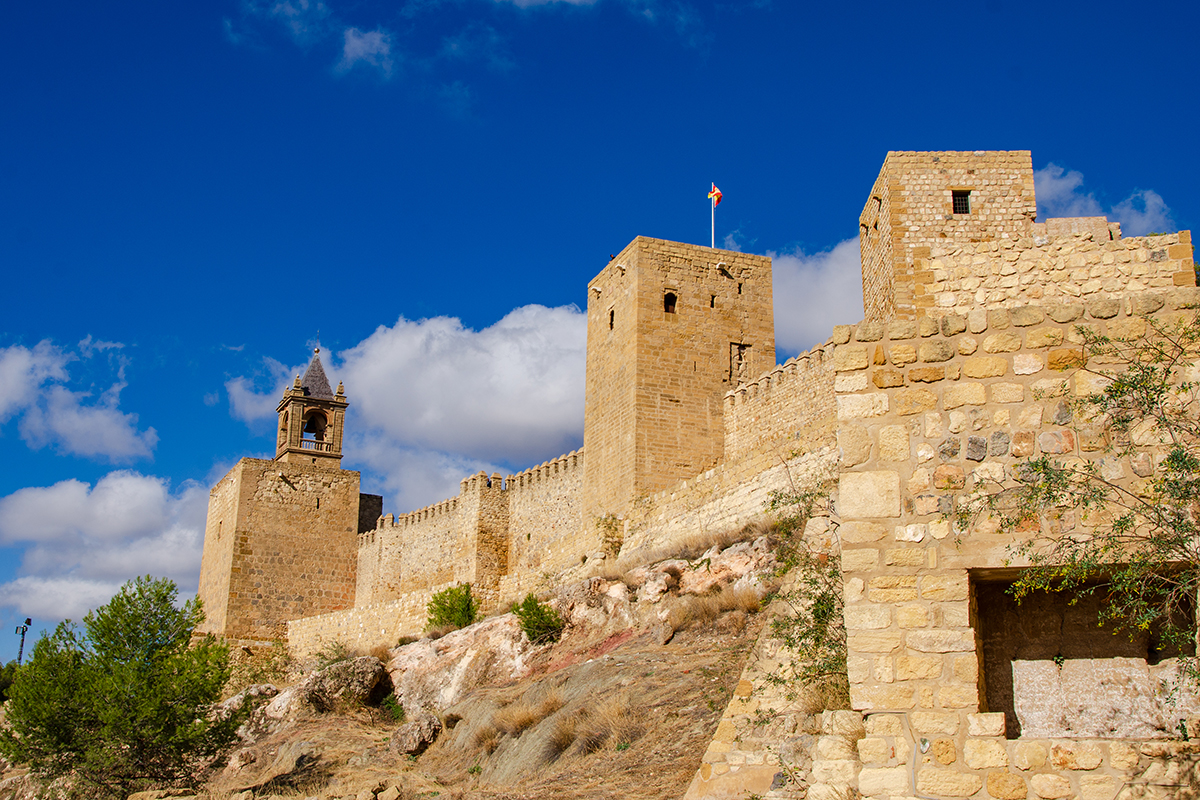
Under Muslim rule, Antequera became Medina Antaquira, with the settlement concentrated on the higher ground around what is now the Alcazaba. The town controlled routes through this part of Andalucía, while the elevated ground provided a natural defensive advantage.
The fortifications developed over several centuries, but Antequera became particularly important as the frontier between the Christian kingdoms to the north and the Nasrid Kingdom of Granada moved southwards. By the fourteenth century, it was a strongly defended frontier town, part of a wider network of fortifications that protected the approaches to Granada.
Much of what we see at the Alcazaba today reflects different periods of building, rebuilding and restoration, so it would be misleading to imagine it as an untouched Moorish fortress. Some elements, including the Torre Blanca, have clear Nasrid origins, while other parts were altered following the Christian conquest. What survives nevertheless gives us a strong sense of why this high point above the town mattered.
That strategic importance eventually made Antequera a target. In 1410, after a lengthy siege, the town was captured by the forces of Infante Fernando of Castile, who subsequently became known as Fernando de Antequera. Granada itself would remain under Muslim rule for another 82 years, but Antequera had now moved permanently onto the Christian side of the frontier.
From Fortress to Prosperous Town
The conquest of 1410 changed who controlled Antequera, but another important change came later. When Granada fell in 1492, the frontier disappeared and Antequera no longer needed to exist primarily as a fortified town looking towards Nasrid territory.
The town began to expand beyond its medieval walls and down onto the lower ground. Its position at the crossroads of important routes through Andalucía now became an economic advantage. Agriculture from the fertile plain, together with trade and crafts, helped Antequera grow into a prosperous commercial centre during the sixteenth century.
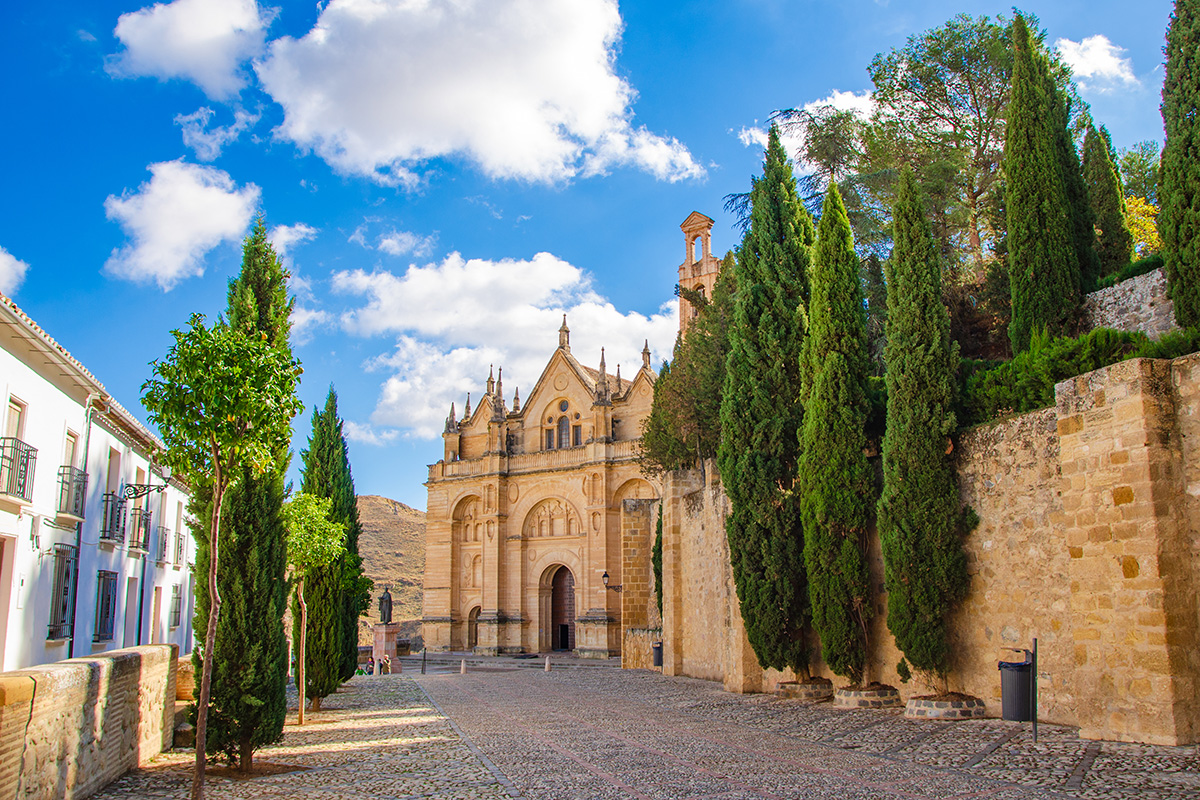
That prosperity helped support an extraordinary period of religious building, but wealth alone doesn't explain the number of churches and convents we see today. As the Christian town expanded, new parishes were established and a succession of religious orders founded houses here. Franciscans, Carmelites, Augustinians, Dominicans and others became part of the growing town, followed by further foundations during the religious fervour of the Counter-Reformation.
By the seventeenth century, Antequera had developed an unusually strong religious presence. Churches, convents and monasteries became part of the expanding town, supported by religious communities, local patronage and growing wealth. Renaissance architecture was followed by increasingly elaborate Baroque building and decoration.
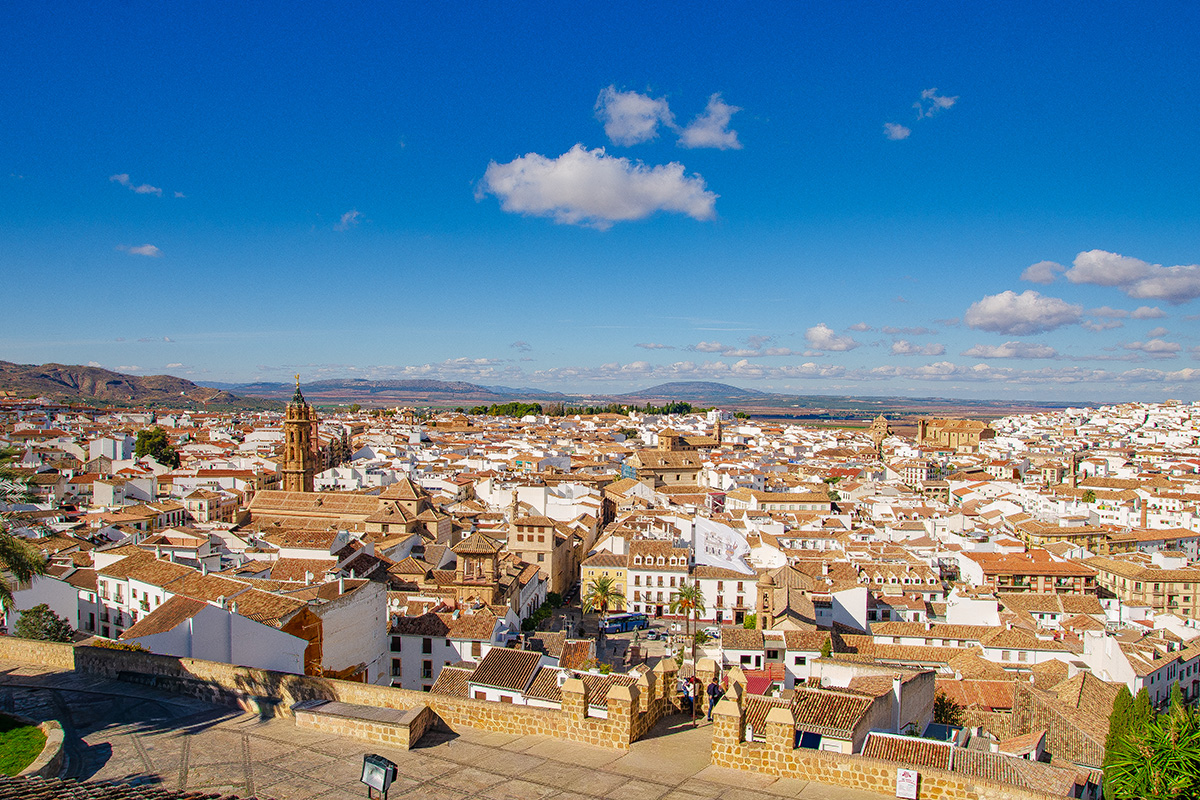
This is particularly striking when you're standing above the town near the Alcazaba. Look across the rooftops and church towers seem to appear in almost every direction. They are evidence of a town that had moved beyond its old defensive walls and entered a new period of growth, prosperity and religious life.
Looking Across Antequera
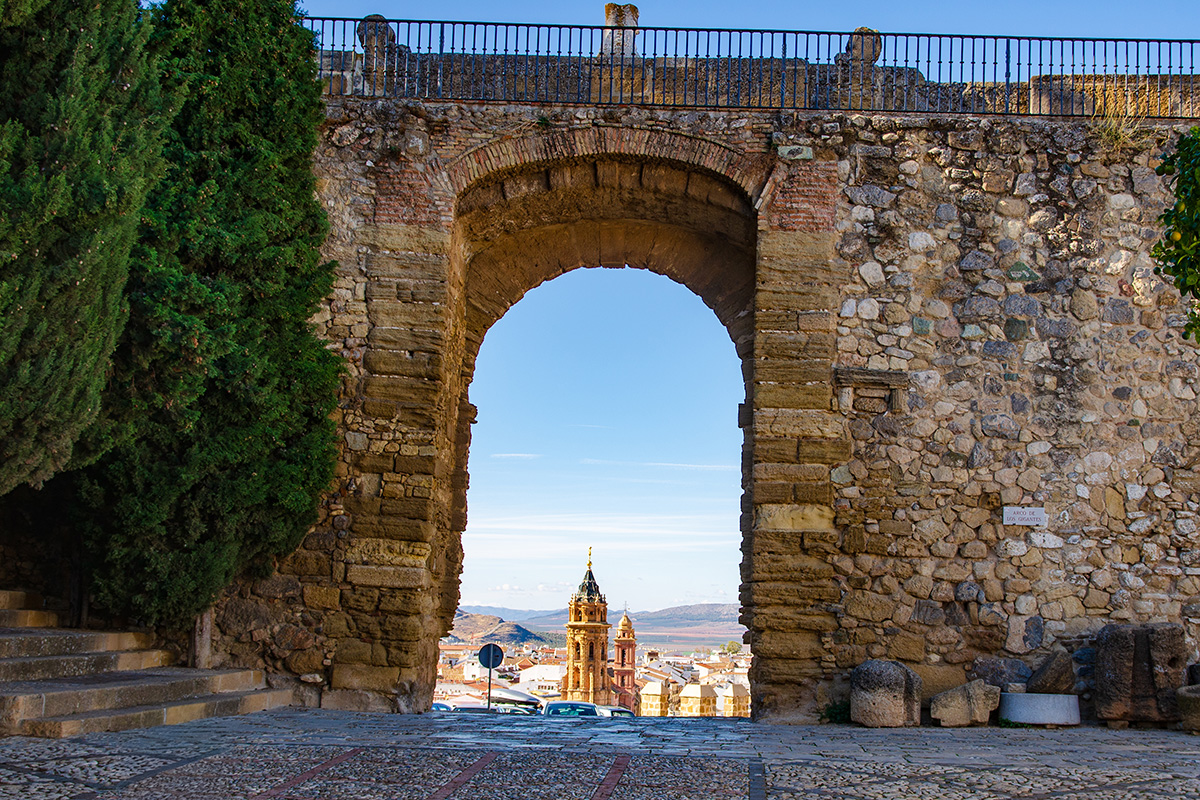
One of the best places to make sense of this history is the Mirador de las Almenillas, beside the Arco de los Gigantes and just below the Alcazaba. We sometimes stop here after a walk, and the view across Antequera takes on a different meaning once you know a little of the story behind it.
Close by are the remains of the Roman baths, taking us back to Antikaria almost two thousand years ago. Behind us rise the walls and towers of the Alcazaba, reminders of the fortified Islamic town and the centuries when Antequera stood close to the frontier with the Kingdom of Granada. Below, the later town spreads across the lower ground, its skyline punctuated by the towers and rooftops of churches and convents built as Antequera expanded and prospered after the Christian conquest.
Look further out, and the landscape becomes part of the story again. The fertile Vega stretches beyond the town, helping to explain why this area could support communities for so long, while the routes through the surrounding countryside remind us why Antequera became such an important crossroads.
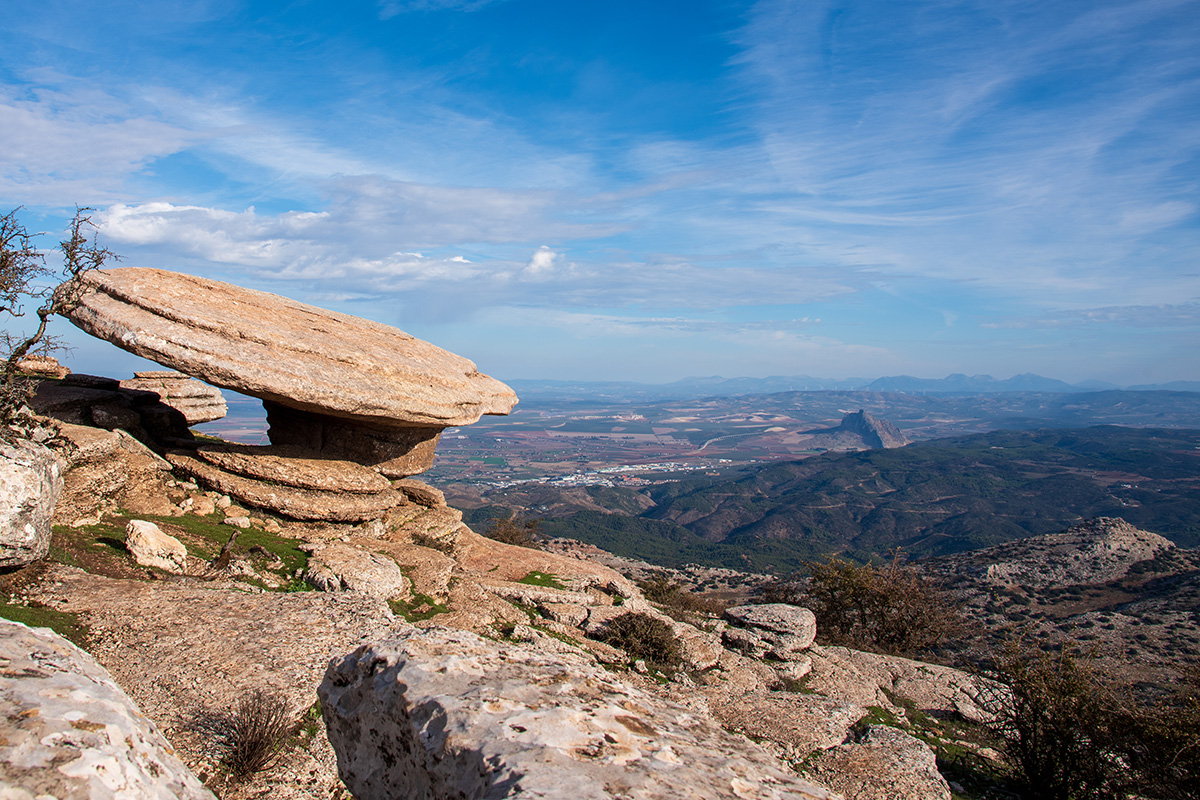
And then there is Peña de los Enamorados, unmistakable on the horizon. More than 5,000 years after the builders of Menga deliberately orientated their monument towards it, we're still standing in Antequera looking at the same extraordinary landmark.
A Little More Time in Antequera
If you're staying in Antequera, or have some free time after walking, much of this history is surprisingly easy to explore on foot. Around the upper town, you can visit the Alcazaba, look down onto the Roman baths and step through the Arco de los Gigantes to the area around the Royal Collegiate Church of Santa María la Mayor.
From there, wandering downhill takes you into the Antequera that developed after the medieval period. Churches, convents, squares and narrow streets appear almost one after another, and you don't necessarily need a plan. Part of the pleasure is simply walking through the town and beginning to recognise some of the different periods we've encountered along the way.
And if you have more time, the Dolmens are well worth visiting in their own right. Standing inside Menga and looking along its enormous stone passage towards Peña de los Enamorados brings us back to the beginning of Antequera's story, thousands of years before the Romans, the Alcazaba or the church towers that now fill its skyline.
Whether you spend an afternoon exploring or simply stand above the town for a few minutes after a walk, knowing a little of what happened here changes the view. Antequera stops being somewhere we happen to pass through and becomes a place whose history you can begin to recognise around you.
