
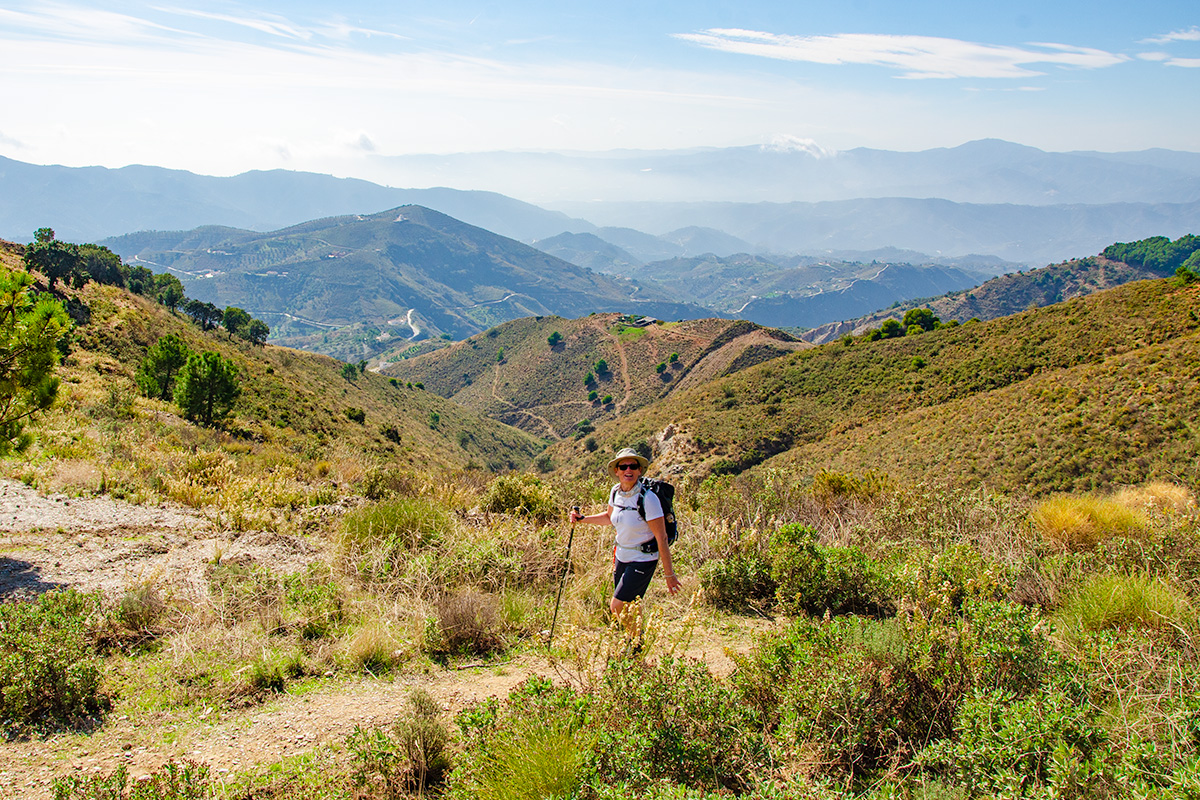
What I enjoy most about walking in the Axarquía is the variety. Within a surprisingly small area, you can spend one day walking through white villages, another across terraced hillsides, and the next exploring dramatic mountain scenery or coastal paths above the Mediterranean.
The landscapes change quickly, but they never feel disconnected. Mountains give way to valleys, where olive groves and almond trees surround the villages, and ancient paths still link communities that have shared this landscape for centuries.
Seeing how those landscapes fit together makes every walk a little more interesting.
What Makes the Axarquía Different?
There are plenty of places where you can enjoy good walking. What makes the Axarquía different is the way the landscape, history and village life all come together. One moment you're following an old hillside path, the next you're walking through a white village where daily life carries on much as it always has.
It's a region where the past still feels part of the present. Ancient irrigation channels continue to carry water across the hillsides, traditional farming still shapes the landscape, and many of the paths we walk have linked villages and communities for centuries.
That's what makes walking here so enjoyable. You're not simply walking through the countryside. You're walking through a landscape that people have lived in, worked in and adapted to for generations.
Landscape and Scenery
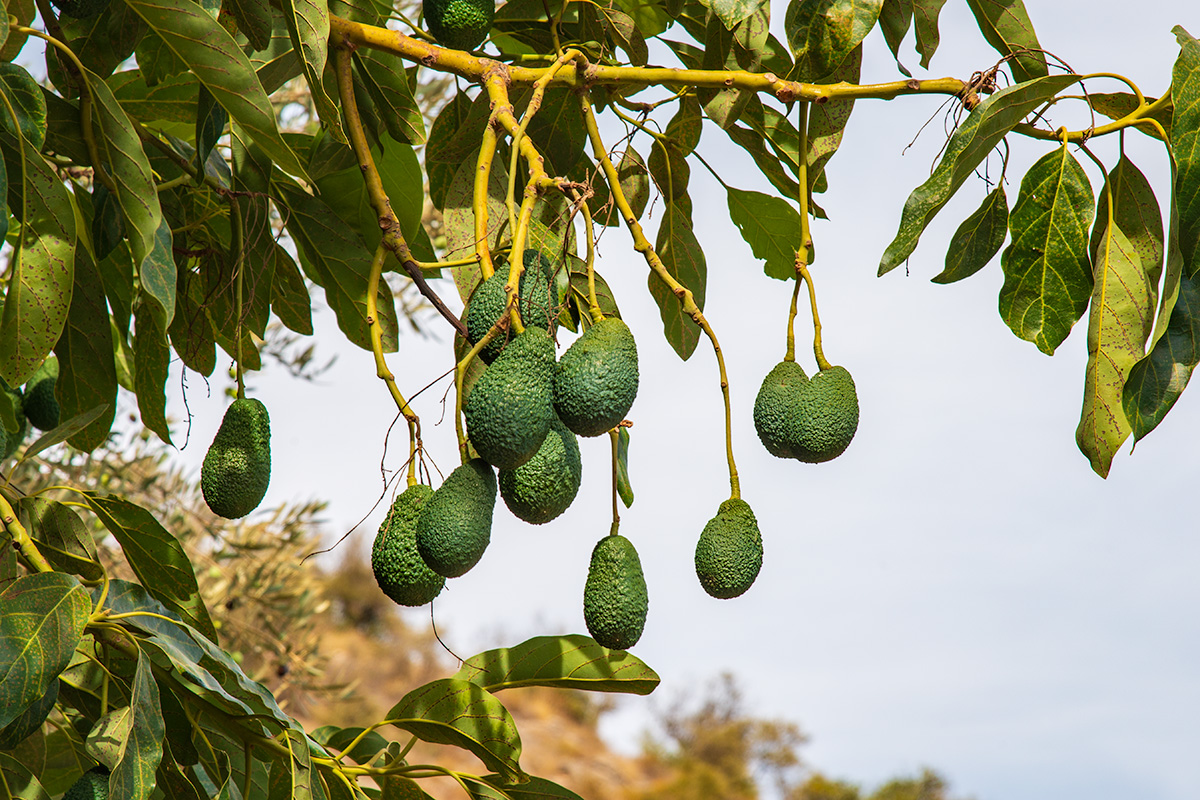
Few regions offer such a variety of landscapes. From the Mediterranean coastline, the land rises through subtropical orchards of mangoes and avocados, olive groves and almond trees before reaching the dramatic peaks of the Tejeda and Almijara mountains.
That variety is one of the reasons no two walks feel quite the same. Coastal paths above the Mediterranean give way to White Villages, terraced hillsides and dramatic mountain scenery. Every landscape reveals a different side of the region.
One of the real pleasures of walking here is that you don't have to travel far before the scenery changes completely, yet everything still feels connected as part of the same landscape.
History and Culture
You don't have to look very hard to find the Axarquía's history. It's all around you. You'll see it in the White Villages, the ruins of Moorish castles and hilltop fortresses, the old paths linking one community to another and the ancient irrigation channels that still carry water across the hillsides today.
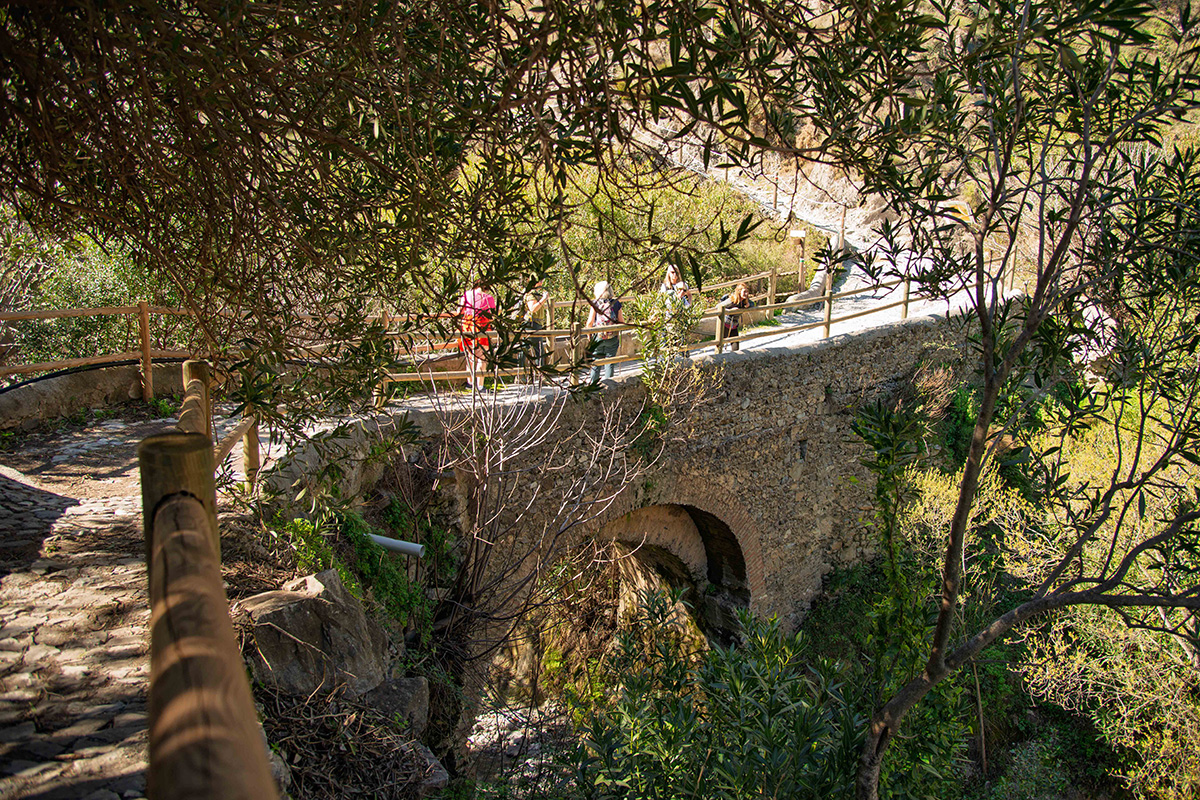
Many of the paths we walk have been used for centuries. Long before they became walking trails, they connected villages, farms and places of work, making them an important part of everyday life. Some are still used by local people today.
The Moorish period left a lasting mark on the region, influencing everything from the layout of the villages to the way water was managed and crops were grown. Once you begin to recognise those connections, the landscape becomes much easier to understand.
Exploring on Foot
Walking in the Axarquía isn't just about reaching the end of the trail. It's about everything you experience along the way.
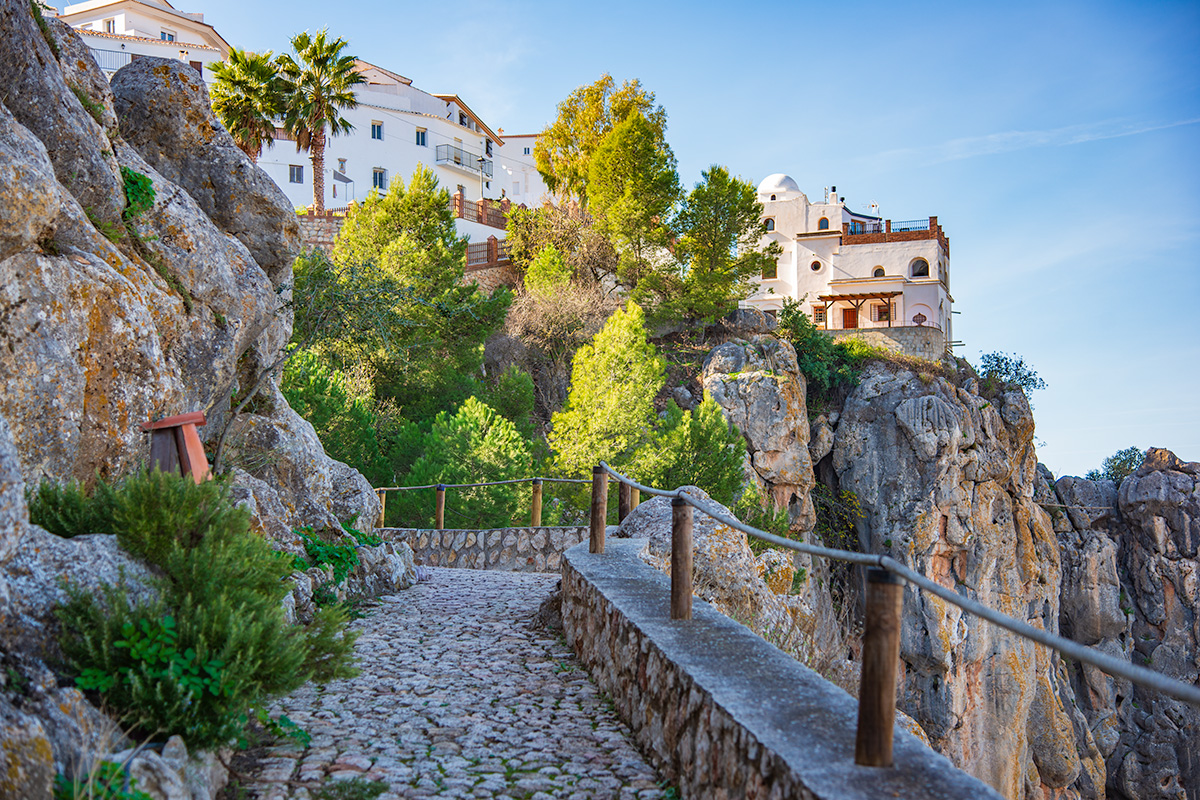
We'll follow old paths linking one village to the next, walk beneath limestone cliffs, through olive groves, alongside ancient irrigation channels and into river gorges shaped by flowing water over thousands of years. From places such as Comares, the views stretch from the surrounding mountains to the Mediterranean, while elsewhere the White Villages themselves become the highlight of the day.
I never feel the need to rush. We'll stop to enjoy the views, take photographs, wander through villages and, if we come across a good village café, stop for a coffee and perhaps a few tapas. Those moments are just as much a part of the walking holiday as the trails themselves, and they're one of the reasons every day feels a little different.
Wildlife and Nature
The variety of landscapes doesn't just make the Axarquía interesting to walk through. It also creates a remarkable range of habitats for wildlife.
As we walk, it's not unusual to see Griffon Vultures circling overhead or Spanish Ibex picking their way across rocky slopes. In spring and early summer, you may also catch sight of the brightly coloured European Bee-eater or the unmistakable Hoopoe, with its striking crest and distinctive, gently bubbling call. Depending on the time of year, the hillsides can be covered with wildflowers, from colourful orchids and rock roses to many of the smaller plants that are so easy to miss unless you stop and look.
Every season brings something different. Wildlife and wildflowers are never guaranteed, but they're often one of the unexpected highlights of the day. They're another reminder that no two walks in the Axarquía ever feel quite the same.
I never tire of walking in the Axarquía. Every season brings something different, the light changes throughout the year and there's always another detail to notice, whether it's a hillside covered in wildflowers, a pair of Hoopoes feeding nearby or a familiar view that somehow looks completely different from the last time I stood there.
That's why I enjoy sharing the Axarquía with other walkers. Every holiday gives me the chance to introduce someone to this remarkable part of Andalucía for the first time. I hope you'll leave feeling the same way I do every time I finish a walk here, already looking forward to coming back.
